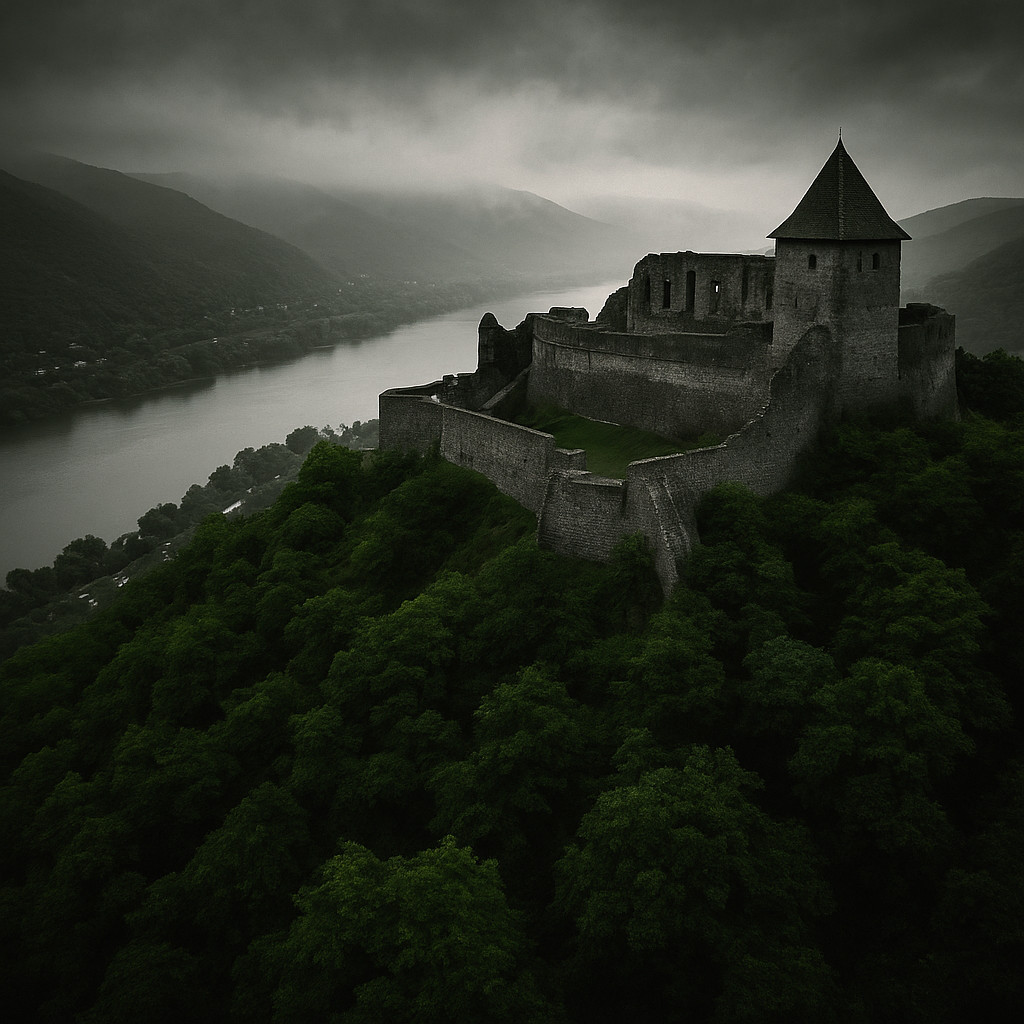
The Fortress That Watches the Danube
Rising high above the Danube Bend, the castle of Visegrád Hungary stands like a silent guardian of centuries past. Its stone walls have seen kings, battles, and treaties that shaped a nation. From its towers, the view stretches endlessly — green forests below, the silver river curving like a sword, and the soul of Hungary glowing in the mist.
For travelers who have explored the grand Buda Castle District or admired the beauty of the Chain Bridge, Visegrád offers a wilder, more ancient face of Hungary — untamed, quiet, and filled with legends.
A Royal Fortress Forged in Stone
The castle of Visegrád was built in the 13th century after the Mongol invasion, when King Béla IV decided Hungary needed a fortress that could never fall. He chose this cliff above the Danube — steep, remote, and unyielding.
A century later, King Charles I made it a royal residence. Under his reign and that of King Matthias Corvinus, Visegrád became a center of diplomacy and art. In 1335, the kings of Hungary, Bohemia, and Poland met here, forming the historic Visegrád Alliance — a symbol of unity that still echoes in Central Europe.
Even today, walking among the castle’s crumbling stones, you feel the weight of history pressing softly against your heart.
Views That Command the Kingdom
Climb to the Upper Castle, and Hungary unfolds before you. The Danube River glitters below, winding between mountains cloaked in green. Villages sleep on its banks, their rooftops reflecting sunlight like tiny crowns.
On misty mornings, the scene feels almost unreal — the same timeless beauty you find at the Citadella Viewpoint in Budapest, but surrounded by forests and silence.
Bring your camera, but more importantly, bring time. Watching the Danube from Visegrád is not about taking photos; it’s about standing still in a world that no longer rushes.
Legends of Kings and Treasures
Every stone in Visegrád Castle hides a story. Locals say that secret tunnels once led to the river, where royal messengers carried gold and letters to Buda. Others whisper that the crown jewels of Hungary were once hidden here, safe from war.
The castle’s museum now displays armor, swords, and relics found in the ruins. Children can hold replicas of medieval weapons and imagine standing beside King Matthias himself, looking out over the empire.
If you enjoyed the mystery of the Buda Castle Labyrinth, you’ll find Visegrád’s silence even more haunting — a living echo of medieval might.
The Lower Castle and Solomon Tower
At the base of the hill stands Solomon Tower, one of the best-preserved fortifications in Hungary. It once served as a prison for foreign kings and nobles. From its windows, prisoners could see the freedom of the river they would never reach.
Today, the tower is open to visitors. Inside, exhibitions display royal seals, coins, and old manuscripts. Outside, the view of the Danube Bend feels infinite — a reminder of both power and fate.
Nature and Adventure Around Visegrád
Beyond its history, Visegrád Hungary is surrounded by trails, forests, and waterfalls. The Apátkúti Valley invites hikers with its quiet streams and mossy paths. Cyclists follow the Danube Bend to Esztergom, another ancient town crowned by its Grand Basilica.
In summer, visitors can ride the bob track, climb to the Zsitvay Lookout Tower, or take a Danube River Cruise that connects Visegrád, Esztergom, and Szentendre. Each route reveals a different piece of Hungary’s natural beauty.
Festivals and Living History
Every July, the castle hosts the Visegrád International Palace Games, a medieval festival filled with jousts, music, and costumes. Knights ride horses across the fields, banners fly, and the smell of roasted meat fills the air.
It’s one of Hungary’s most authentic historical events. Families, historians, and photographers gather to relive a past that refuses to die.
If you’ve visited the Budapest Wine Festival, imagine the same energy but dressed in armor.
How to Reach Visegrád from Budapest
Getting there is easy. Trains and buses depart regularly from Budapest’s Árpád Bridge terminal. The journey takes about 90 minutes and costs less than a Budapest taxi ride. You can also reach Visegrád by boat — a slow and scenic voyage that lets you see the river as kings once did.
For a full day trip, combine Visegrád with nearby Szentendre — The Artists’ Town. Both destinations blend art, history, and breathtaking views.
A Kingdom Above the River
Visegrád is more than a ruin; it’s a feeling. The wind whispers through the battlements, carrying echoes of horns, banners, and victory songs. From its heights, you sense the strength and pride that have defined Hungary for centuries.
As the sun sets behind the hills, the castle glows in amber light — silent, noble, eternal.
Visegrád does not just watch over the river.
It watches over history itself.
For schedules, events, and tickets, visit the official tourism page:
parkerdo.hu
Visegrád Castle — Location on the Map
Overlooking the majestic Danube Bend, Visegrád Castle stands as a powerful relic of medieval Hungary. Its stone towers and winding walls tell stories of kings, battles, and legends, offering visitors a panoramic view that captures the essence of the country’s royal past and natural beauty.