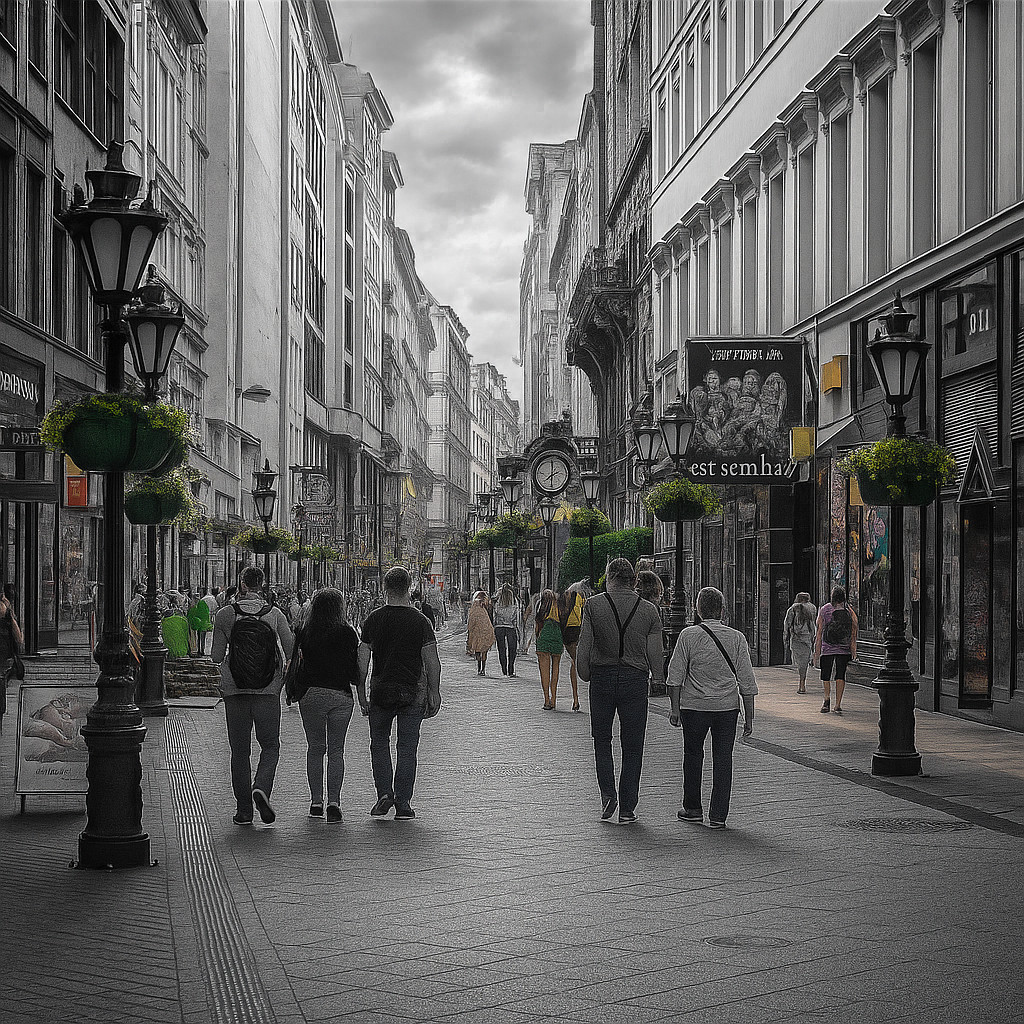
In the heart of Budapest lies Váci Street (Váci utca), the city’s most famous pedestrian avenue — a mix of style, tradition, and sometimes, charming chaos. Whether you come to shop, stroll, or simply watch life unfold, Váci Street Budapest captures the pulse of the city like nowhere else.
This is where locals meet friends for coffee, travelers hunt for souvenirs, and street musicians play beneath the glow of ornate lamps. Yet behind the postcard-perfect scenes, there’s more to discover than meets the eye.
1. The History Behind Váci Street Budapest
Váci Street Budapest dates back to the 18th century, when it became the main commercial artery of Pest.
Over time, it evolved into the elegant promenade we see today — a pedestrian-only street stretching from Vörösmarty Square to Liberty Bridge, lined with cafés, fashion boutiques, and historic façades.
Its southern end once led directly to the medieval city gates; today, it opens toward the Great Market Hall Budapest — the perfect place to start your walk if you want to combine shopping with a taste of authentic Hungarian culture.
A stroll along Váci utca offers a glimpse of how Budapest blends past and present — baroque balconies above luxury stores, echoes of history behind modern glass windows.
2. Shopping on Váci Street — Between Style and Souvenirs
If shopping is your goal, Váci Street Budapest won’t disappoint — but it helps to know where to look.
International brands like Zara, H&M, and Mango line the central section, while smaller side streets reveal hidden boutiques selling Hungarian products, art, and handmade accessories.
For something authentic, skip the generic souvenirs and visit the Great Market Hall Budapest nearby, where paprika, Tokaji wine, and embroidered linens tell a more genuine story of Hungary.
Many travelers also enjoy exploring Local Markets Worth Walking To for unique finds — from ceramics to folk-inspired jewelry.
3. Cafés and Sweet Stops Along the Way
Walking Váci Street can be an experience for your taste buds as well.
Begin at Gerbeaud Café in Vörösmarty Square, where Budapest’s café tradition began in the 19th century. The marble tables, gilded mirrors, and delicate cakes have hosted artists, politicians, and poets for over a century.
Farther down, you’ll find cozy spots like Anna Café and Café Frei, perfect for people-watching over espresso and rétes (Hungarian strudel).
If you’re in the mood for something more atmospheric, take a short detour to Centrál Café, where the intellectuals of old Budapest once debated ideas that shaped the nation.
These cafés are part of the city’s cultural DNA — warm havens amid the bustling rhythm of Váci Street Budapest.
4. Street Performers, Artists, and the Sounds of Pest
What makes Váci Street Budapest truly alive isn’t just its architecture, but its soundscape.
Accordion players, violinists, and magicians perform under the soft glow of streetlights. You’ll hear laughter from terraces, clinking coffee cups, and the occasional tune of a busker echoing through the night air.
This daily theatre of life gives the avenue its soul — a reminder that Budapest isn’t just seen; it’s felt.
Walk slowly, listen, and you’ll sense the rhythm that locals love about their capital.
5. The Tourist Traps — and How to Avoid Them
Let’s be honest: Váci Street Budapest can sometimes feel like a stage for tourism.
Some restaurants here charge more for average food, and souvenir shops may sell “authentic” products made far from Hungary.
To avoid overpriced dining, choose side streets like Régiposta or Párizsi utca, where you’ll find better value and more authentic menus.
If you’re after genuine Hungarian flavors, head toward Best Restaurants in Budapest — there you’ll find recommendations where locals actually eat.
Still, even with its touristy side, Váci Street remains a must-see — a vibrant symbol of Budapest’s hospitality and cosmopolitan charm.
6. Landmarks Along the Way
As you walk, don’t forget to look up. Many of the buildings along Váci Street Budapest date back to the late 19th century and display neo-classical and art nouveau details.
You’ll pass Vörösmarty Square, home to Budapest’s Christmas Market in winter (see Budapest Christmas Guide), and continue past Elisabeth Bridge, leading toward the Danube Promenade.
Every few meters, you’ll find elegant lamp posts, old shop signs, and carved facades that whisper of Budapest’s belle époque — the city’s golden era.
7. Where Váci Street Meets the Danube
At its southern end, Váci Street Budapest opens toward Liberty Bridge and the entrance to the Great Market Hall Budapest.
This area offers one of the best transitions from the modern city to the historical heart.
The view of Gellért Hill across the river adds a dramatic finale to the walk.
In spring and summer, street artists and flower stalls decorate the square, giving it a cheerful, local feel even amid the flow of visitors.
8. A Parallel World — Deák Ferenc and Fashion Street
Just a short walk away from Váci Street, Deák Ferenc Street (often called Fashion Street) offers a more refined shopping experience.
Elegant stores and festive lighting make it one of the city’s most photogenic areas at night.
This boulevard connects beautifully to Andrássy Avenue, forming a golden triangle of culture, style, and history at the heart of Pest.
9. When to Visit Váci Street Budapest
- Morning: Best for peaceful walks and photos before the shops open.
- Afternoon: Ideal for shopping and café-hopping.
- Evening: Perfect for atmosphere — the lights, the music, the buzz.
During December, the street is draped in twinkling Christmas lights, leading directly to St. Stephen’s Basilica Market and Vörösmarty Square.
If you love festive vibes, combine it with our Budapest Christmas Guide to make the most of the season.
10. Final Tips — Walk, Pause, and Feel the City
Take Váci Street Budapest as more than just a shopping spot — see it as a cultural experience.
Stop for coffee, watch people pass, and look beyond the crowds to notice the details that make the city alive.
For an even deeper experience, join our Budapest Walking Tour — you’ll learn how this street once symbolized the city’s prosperity and how it continues to shape Budapest’s story today.
Váci Street — Between Glamour and Authenticity
Váci Street Budapest embodies the dual nature of the city — elegant yet casual, local yet global, timeless yet ever-changing.
It’s a place where tradition meets temptation, where memories are made between a coffee cup and a cobblestone.
Walk it once, and you’ll understand why, for centuries, every traveler has passed through its heart — and every local has a story to tell about it.
Váci Street — Location on the Map
Váci Street is the heartbeat of downtown Budapest — a bustling promenade where luxury stores, cozy cafés, and tourist traps coexist under the glow of historic façades. Whether you come to shop, stroll, or simply people-watch, this elegant street captures the essence of the city’s urban rhythm.