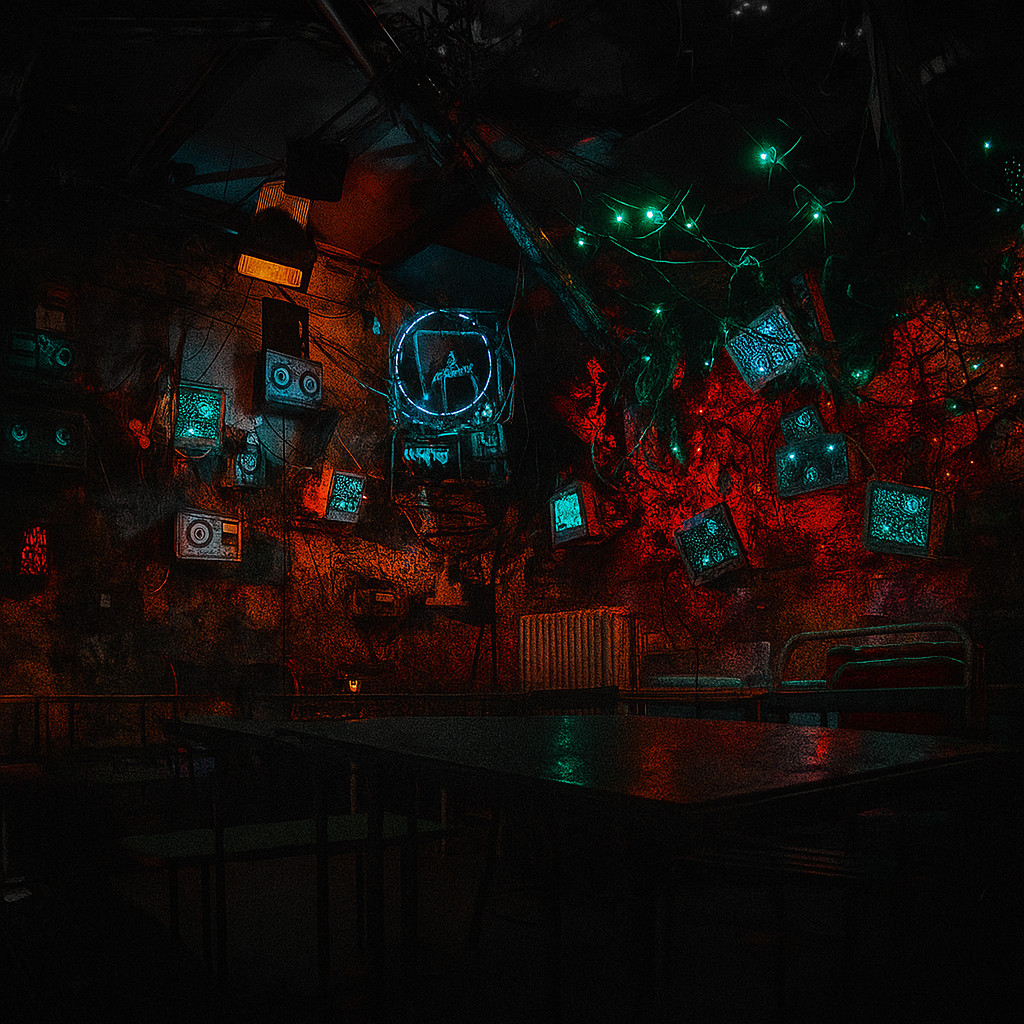
The Place Where It All Began
To understand Budapest’s nightlife, you must start where it was born — Szimpla Kert Budapest, the first and most iconic ruin bar in the city.
Hidden in the Jewish Quarter, this legendary venue transformed a decaying pre-war building into a temple of art, music, and free spirit.
Every wall here tells a story. Every chair, lamp, and graffiti piece was collected from somewhere else — a symbol of how Budapest rebuilt itself through creativity after decades of neglect.
What began in 2002 as an experiment quickly became a cultural revolution. Szimpla was not just a bar; it was an idea — that beauty can rise from decay, that imperfection can be art.
For official schedules and events, visit szimpla.hu.
Szimpla Kert — Location on the Map
In the buzzing Jewish Quarter of Budapest, Szimpla Kert redefined nightlife. This legendary ruin bar blends retro furniture, art installations, and an open-air courtyard to create an atmosphere unlike anywhere else in Europe — a must-see for travelers searching for the authentic pulse of Budapest’s night scene.
The Birth of the Ruin Bar Movement
Before Szimpla, the concept of a ruin bar did not exist. Budapest was filled with abandoned buildings — silent witnesses of another era.
When a group of young locals rented this crumbling space on Kazinczy Street, they didn’t fix it. They celebrated it.
Old bathtubs became couches, televisions turned into fish tanks, and chandeliers hung from rusty pipes.
The mix of absurdity and authenticity gave life to a new subculture — one that would later define the Ruin Bars Budapest experience.
Soon, others followed: Instant-Fogas Complex, Füge Udvar, and dozens of smaller bars that still carry Szimpla’s rebellious DNA.
Inside the Labyrinth
Stepping into Szimpla Kert feels like entering a dream built from forgotten objects.
The courtyard, once an open ruin, is now the heart of the complex — filled with plants, colored lights, and the faint smell of beer and tobacco.
Each room is different:
- A hall of mismatched furniture where people sketch, talk, or dance.
- A cinema room projecting art films on cracked plaster walls.
- A stage where local bands and DJs perform under the glow of recycled lamps.
- A quiet corner upstairs where you can look down on the chaos below.
The soundscape shifts constantly — from live jazz to indie rock, from electronic beats to Hungarian folk nights. The bar seems to reinvent itself every hour.
The Farmers’ Market and Daytime Soul
Szimpla is not only a nighttime legend. On Sundays, it transforms into one of the city’s most beloved farmers’ markets.
Locals gather to buy organic produce, cheese, honey, and homemade pastries while musicians play acoustic sets in the courtyard.
It’s a completely different atmosphere — calm, authentic, and deeply Hungarian.
The same walls that hosted thousands of dancers the night before become a place of community and warmth the next morning.
This duality is what keeps Szimpla Kert Budapest alive: it is both chaotic and human, a mirror of the city itself.
A Hub for Art and Activism
Beyond being a bar, Szimpla has become a cultural institution. It supports art exhibitions, film screenings, and social projects.
Street artists decorate the walls freely, and many of the murals change each season.
This connection to the city’s artistic soul links it closely with the scene explored in Street Art in the Jewish Quarter — both movements share the same message: creativity belongs to everyone.
Even its name, “Szimpla,” meaning “simple,” reflects a philosophy — to create joy without pretension, to use what’s available and turn it into something beautiful.
The Energy of the Jewish Quarter
The surrounding Jewish Quarter is a mosaic of contrasts — ancient synagogues beside neon-lit bars, murals beside memorials.
You can explore this area deeply through the Jewish Quarter Walking Tour, which reveals how the neighborhood became a symbol of survival and renewal.
After the tour, Szimpla feels even more powerful. It stands as proof that this part of Budapest, once forgotten, has reinvented itself as the creative heart of the city.
Drinks, Music, and Atmosphere
Szimpla’s drink menu is simple yet diverse — local pálinka, Hungarian craft beers, and cocktails that match the bar’s playful style.
There’s no luxury here, but that’s precisely the point. The charm lies in the atmosphere, not the menu.
The bar hosts open-mic nights, jam sessions, and spontaneous performances. On any given night, you might hear live trumpet from the balcony while a DJ mixes techno in the next room.
Crowds gather from every corner of the world — travelers, students, locals, and artists all sharing the same space, the same rhythm.
When to Visit
The best time to visit Szimpla Kert Budapest is after 9:00 PM, when the lights dim and the music begins to pulse.
By midnight, the courtyard becomes a sea of sound and color, alive yet never overwhelming.
If you prefer to see the space itself — the murals, installations, and details — come in the early evening before the crowd builds.
Every hour shows a different side of the same place.
What to Expect
Expect the unexpected.
The table might be a bathtub. The ceiling might be covered with bicycles. The bartender might serve your drink from a broken piano.
That surreal, spontaneous energy is the essence of Szimpla. It’s what inspired the entire ruin bar culture and made Budapest’s nightlife world-famous.
If you wander between Szimpla, Füge Udvar, and the Instant-Fogas Complex, you’ll feel how each place reflects a piece of the same story — one that began with a single idea: to turn ruins into art.
The Legacy of Szimpla
More than twenty years later, Szimpla Kert Budapest remains a pilgrimage site for anyone exploring the city.
It’s not just the oldest ruin bar — it’s the heart from which all others grew.
Even as trends change, Szimpla endures because it isn’t trying to be fashionable. It’s authentic, raw, and alive.
The laughter, music, and color inside these walls represent something timeless — Budapest’s ability to reinvent itself through creativity.
So, whether you visit to dance, to listen, or just to sit beneath the flickering lights and watch it all happen, one thing is certain:
you haven’t truly seen Budapest until you’ve stepped into Szimpla.