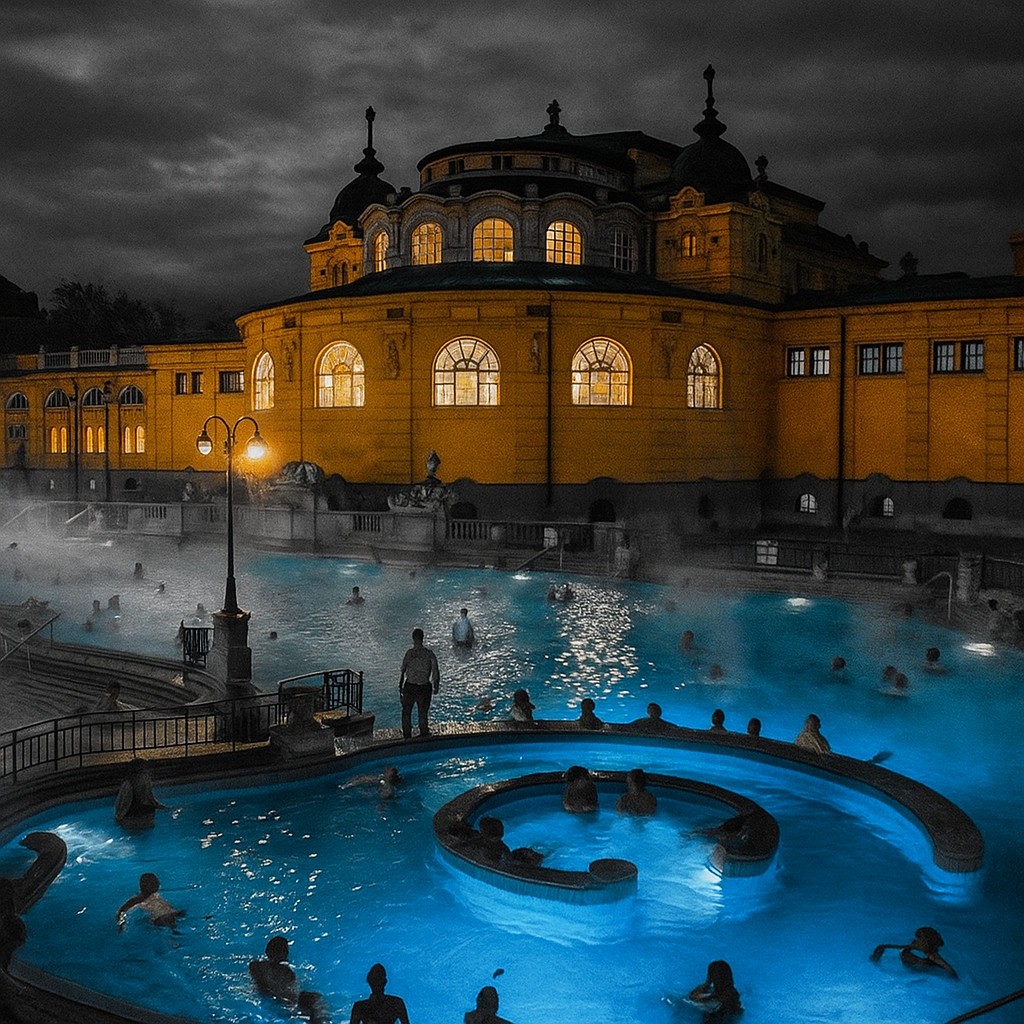
Few places capture the soul of Budapest as vividly as Széchenyi Thermal Bath. Set within the leafy expanse of City Park (Városliget), this monumental bath complex is not merely a wellness destination — it is a symbol of the city’s identity, a sanctuary of healing, leisure, and timeless grandeur.
A Palace Built for Water and Light
When the Széchenyi Thermal Bath opened its doors in 1913, it stood as a marvel of early 20th-century engineering. Beneath its neo-Baroque domes lies one of Europe’s deepest and hottest thermal springs, gushing mineral-rich water at 76 °C. The architects, Győző Czigler and later Eugene Schmitterer, imagined more than a spa — they built a palace of water, where citizens could step away from the noise of the world and rediscover calm.
The bright yellow façades, colonnades, and sculptures reflect the optimism of a new century, while the continuous steam rising from its pools evokes a mystical presence that still defines Budapest’s atmosphere.
Just steps away stand the Vajdahunyad Castle and Heroes’ Square, completing a trio of landmarks that make City Park one of the most iconic areas in the Hungarian capital.
The Thermal Source — Deep Beneath the City
The hot spring feeding Széchenyi was discovered in 1879 after drilling over a thousand meters below ground. Its water, rich in calcium, magnesium, and hydrogen carbonate, is said to relieve joint pain, arthritis, and stress. Today, it fills 15 indoor and outdoor pools, from scalding hot baths to cold plunge pools, each crafted for different health purposes.
Locals believe that taking the waters here is a ritual of renewal. Tourists, meanwhile, find in Széchenyi not only relaxation but also a direct encounter with Budapest’s essence — a city literally built on hot water.
Morning Steam and Night Glow
At dawn, the outdoor pools shimmer under the first light. Elderly Hungarians play chess on floating boards, their quiet moves marking time as the steam rises. By midday, the baths fill with a lively mix of travelers and locals, laughter echoing beneath the domes.
But it is at night when Széchenyi becomes otherworldly. Under the orange glow of the lamps, with the vapor swirling in the cold air, the atmosphere feels cinematic — part dream, part legend. The experience recalls the Rudas Baths Budapest, another of the city’s thermal temples, but Széchenyi remains unmatched in scale and energy.
Inside the Bath Palace
The indoor section features mosaic corridors, statues of sea gods, and a maze of saunas and plunge pools. Each room carries its own microclimate: dry, wet, or infused with herbs. The grand central hall, with its arched ceilings and pale light, still feels like the social heart of 1913 Budapest.
You can choose a daily ticket, rent a cabin, or indulge in a massage therapy session. Beyond the bathing area lies a fitness center and even a beer spa, where guests soak in warm water mixed with natural hops and malt — an experience that unites wellness with Hungarian humor.
Part of a Greater Thermal Legacy
Széchenyi Thermal Bath is part of Budapest’s vast underground world of hot springs — over a hundred thermal sources feeding more than thirty bathhouses. Among them, the Gellért Thermal Bath charms with its Art Nouveau design, while the Rudas Baths Budapest preserve Ottoman architecture from the 16th century.
Together, they form the living heritage that earned Budapest the title “City of Spas.” Széchenyi remains its beating heart — the meeting point where history, health, and beauty flow together.
How to Visit Széchenyi Thermal Bath
Getting There
The easiest way to reach the bath is by Metro Line 1 — Europe’s oldest underground line — to Széchenyi fürdő station, just steps from the entrance. You can also walk from Heroes’ Square, making it a perfect stop on your Budapest 1-Day Walking Route.
When to Go
Early mornings (7 a.m. – 9 a.m.) are the calmest, ideal for photography and serenity. Afternoons bring more energy, while evenings offer the famous contrast between hot water and cold air. Winter adds a magical mist, while summer brings long golden sunsets over the steaming pools — perfect if you love the mood of Best Sunset Spots in Budapest.
Tips for Visitors
Bring flip-flops, a swimsuit, and a towel; you can rent lockers or private cabins. Photography is allowed outdoors, but keep discretion inside. Tickets vary by time and service — details are available on the official Széchenyi Bath website (external link).
The Spirit of Budapest in Water
Standing in the outdoor pool of Széchenyi, surrounded by steam and the ornate yellow walls, you feel something beyond relaxation — a connection to centuries of thermal tradition, to the earth itself.
The same waters that have flowed here for generations still invite you to stop, breathe, and rediscover the rhythm of life.
For travelers exploring thermal culture, pair your visit with Thermal Bath Etiquette Budapest to understand local customs, and with the Best Thermal Baths in Budapest — Ultimate Guide to explore the city’s full spectrum of healing waters.
Conclusion
Széchenyi Thermal Bath is more than Budapest’s most famous spa — it is the city’s living pulse. To walk through its steam is to walk through time, to share in a ritual that unites the elegant and the ordinary, the local and the traveler, all beneath the same rising mist.
Széchenyi Thermal Bath Budapest — Location on the Map
Situated within City Park, the Széchenyi Thermal Bath is Budapest’s grandest symbol of spa tradition. Its majestic yellow architecture, steaming outdoor pools, and healing mineral waters attract visitors year-round — a timeless retreat for wellness, relaxation, and Hungarian spa heritage.