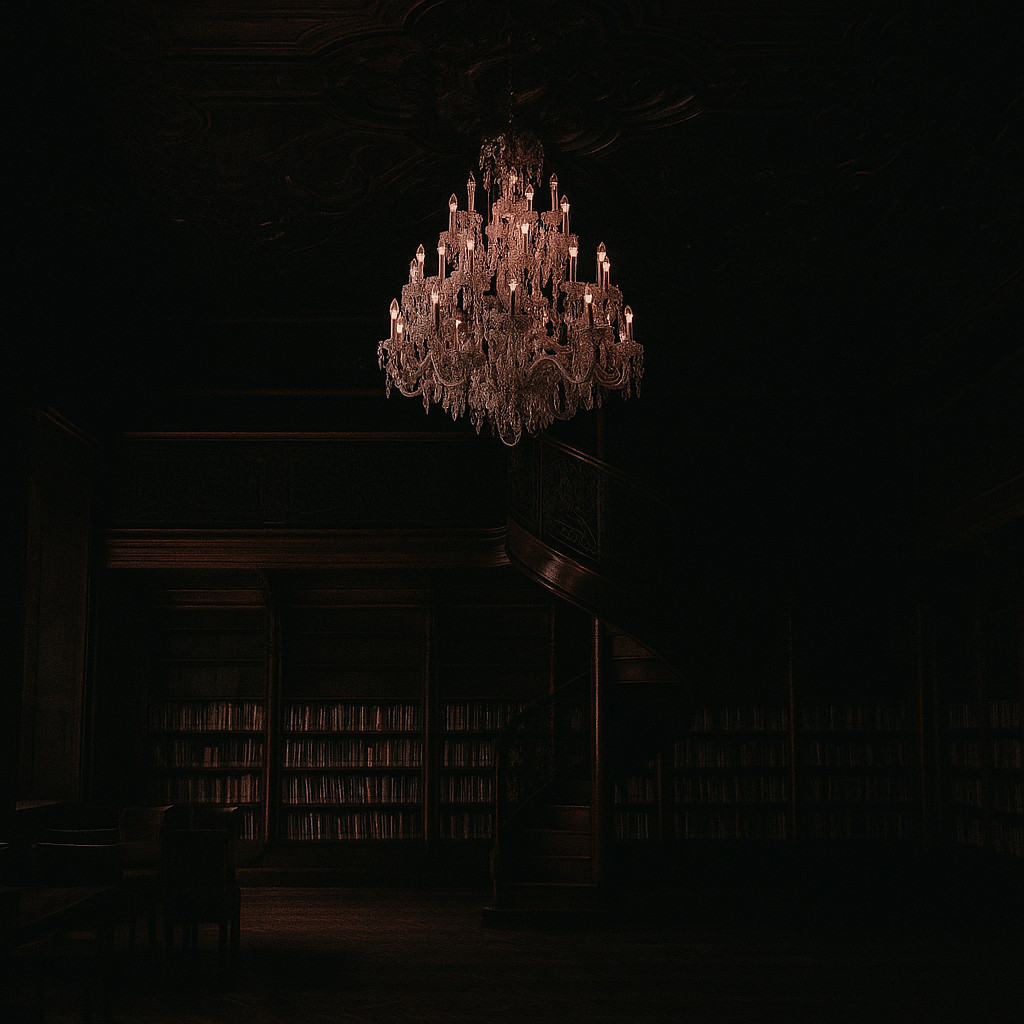
A Secret Hidden Behind Ordinary Walls
Tucked away in the heart of Pest, behind a façade that gives no hint of its splendor, lies one of Budapest’s most enchanting secrets: the Szabó Ervin Library Budapest.
Visitors who enter expecting an ordinary library are met with something entirely different — a time capsule of aristocratic elegance, where silence glows beneath chandeliers and books sleep inside gilded halls.
More than a library, it is a forgotten palace reborn.
The building once belonged to the Wenckheim family, one of Hungary’s noble dynasties. In the late 19th century, Count Frigyes Wenckheim commissioned this mansion as his residence, combining Neo-Baroque luxury with Renaissance detail. Decades later, the city transformed it into a public library — but its spirit as a private palace never left.
Today, students, researchers, and dreamers gather here daily, surrounded by architecture that feels more like a royal salon than a reading room.
From Aristocracy to Public Wisdom
Completed in 1889 and designed by architects Henrik Koch and Árpád Ybl, the Wenckheim Palace symbolized the grandeur of an age when Budapest was known as the “Paris of the Danube.” Its rooms hosted balls, dinners, and political gatherings — the kind of events that defined the city’s social elite.
But as the 20th century reshaped Hungary, the palace found a new destiny. In 1931, the building became the Metropolitan Ervin Szabó Library, named after the visionary sociologist and librarian who believed that knowledge should belong to everyone.
Walking through its corridors today, one feels that dual identity — the opulence of the past and the quiet democracy of learning. The marble staircases still gleam beneath gold-trimmed ceilings, and the soft creak of wood floors whispers of both scholars and ghosts.
The Heart of the Palace
The main attraction of the Szabó Ervin Library Budapest is the Wenckheim Hall, a breathtaking reading room that looks more like a ballroom than a study space.
High ceilings stretch toward painted frescoes, while walls of carved wood and velvet curtains embrace shelves filled with centuries of thought.
Golden chandeliers hang like constellations. Large mirrors reflect endless rows of books, multiplying their presence into infinity. Every surface — from the curved staircases to the wrought-iron lamps — is a tribute to craftsmanship and time.
When sunlight filters through the tall windows, dust motes drift like stars, and silence becomes something you can almost touch. Even laptops and smartphones, usually intruders in historic places, seem to bow before the weight of the room’s serenity.
Where Time Stands Still
The Szabó Ervin Library is more than a place for reading — it is a refuge from noise, a temple for those who believe in beauty.
Many visitors describe the feeling of stepping inside as stepping out of the present. The air smells faintly of paper and wood polish, the rhythm of footsteps echoes softly across marble tiles, and outside noises fade away completely.
Unlike the busy cafés of Váci Street or the open plazas like Liberty Square, here Budapest feels suspended in time.
Writers come to work in silence, tourists whisper in awe, and locals simply read beneath portraits of long-gone nobles who seem to still be watching over the books.
Discovering Hidden Corners
One of the library’s most charming qualities is how it reveals itself gradually. Each door opens into another surprise — an intimate reading room, a quiet courtyard, or a hallway adorned with murals.
The modern extension of the library, located in the same complex, connects the palace to a contemporary world of digital archives and public study spaces. Yet the transition feels seamless: a metaphor for Budapest itself, where the past and future coexist without conflict.
Those exploring the area on foot often pair their visit with nearby landmarks such as Andrássy Avenue or St. Stephen’s Basilica — all within walking distance from this hidden gem.
The Spirit of Ervin Szabó
Ervin Szabó, the library’s namesake, was not only a librarian but also a reformer and philosopher. In the early 1900s, he envisioned a network of libraries open to all citizens — a revolutionary idea at a time when access to knowledge was reserved for the elite.
His dream found its home here, within the walls of what was once an elite mansion. The transformation of this palace into a public library stands as one of Budapest’s quiet triumphs — proof that elegance and equality can coexist.
Reading as a Ritual
Those who come to the Szabó Ervin Library Budapest quickly learn that reading here feels ceremonial. The silence is sacred, but not intimidating — it embraces you. Each turn of a page seems amplified, each ray of light feels choreographed.
When night falls, and the chandeliers flicker with warm gold light, the atmosphere becomes cinematic. It is easy to imagine scenes from an old movie — a scholar lost in thought, a letter written by candlelight, or perhaps a visitor discovering something they were never meant to find.
This hauntingly beautiful aura places the library among Budapest’s must-see experiences for travelers who seek not crowds but moments of stillness.
Visiting the Szabó Ervin Library
The library is located on Reviczky Street 1, in the Palace District, not far from the Kálvin tér metro station.
Entrance to the main reading rooms requires a day pass or a library card, but visitors can access the palace areas for a modest ticket fee.
The library remains open on weekdays and Saturdays, though hours vary. For updated schedules, refer to the official site at fszek.hu.
Photography is permitted in most areas, but respect for the quiet atmosphere is essential. Keep voices low, avoid flash, and remember that this is a place of study, not spectacle.
The Soul of Budapest in Silence
Few places in the city embody Budapest’s character as completely as the Szabó Ervin Library.
It combines grandeur and melancholy, intellect and emotion, history and hope — the very ingredients that define the Hungarian capital.
Standing inside the main hall, surrounded by centuries of words and memories, you understand that Budapest is not only a city to see, but a city to feel.
And when you leave, stepping back into the noise of modern life, the silence of that palace lingers in your thoughts — a reminder that beauty can exist quietly, without asking for attention.
To experience the stories that lead to treasures like this one, join a walking tour in Budapest — where every corner hides a new secret waiting to be found.
Szabó Ervin Library Budapest — Location on the Map
Hidden within the bustling city center, the Szabó Ervin Library is a masterpiece of silence and sophistication. Originally a baroque palace, its ornate halls now house thousands of books, offering visitors a timeless refuge where history and knowledge meet in golden light.