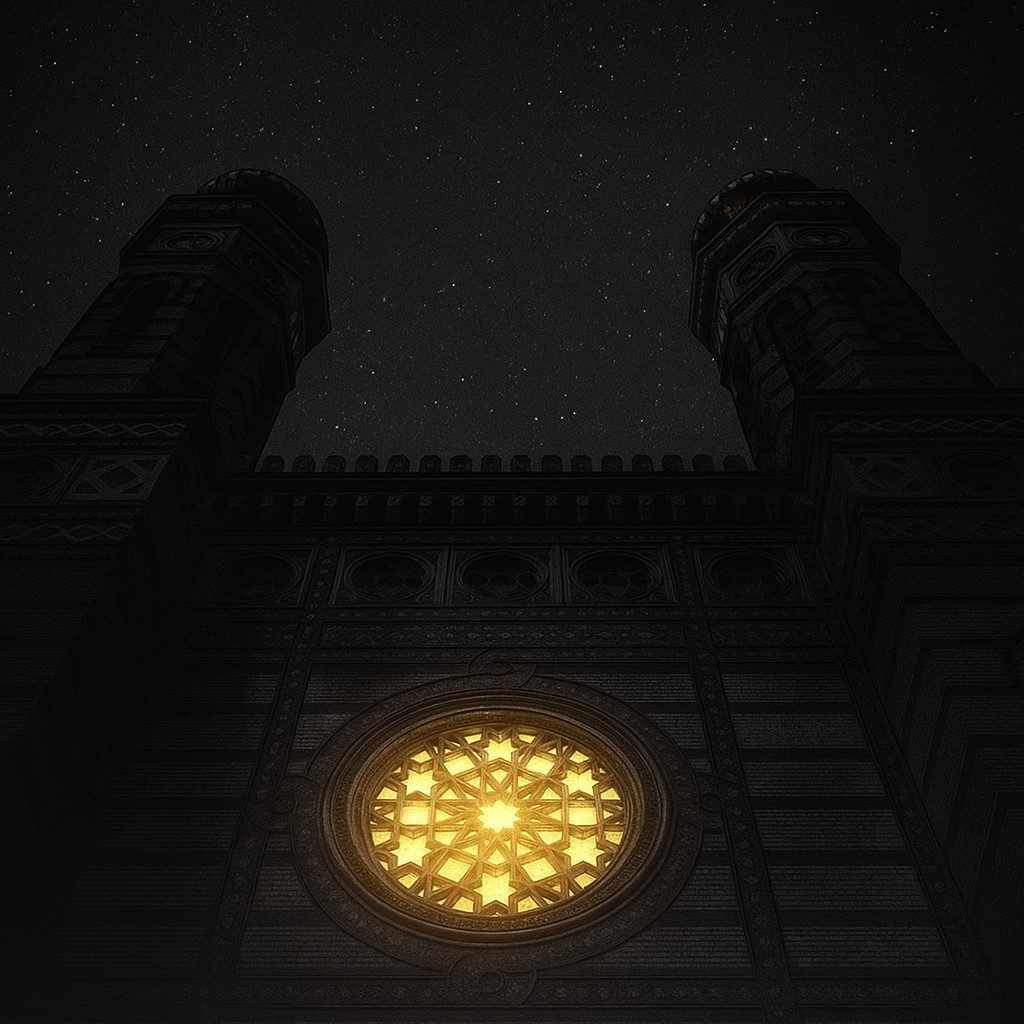
Among the many landmarks that define the Hungarian capital, The Synagogues of Budapest stand as powerful witnesses of history, faith, and resilience. Walking through the city’s Jewish Quarter, visitors encounter buildings that are not only sacred places of worship but also living monuments to centuries of coexistence and culture. From monumental domes to quiet courtyards, each synagogue tells a story of devotion and survival that continues to shape Budapest’s identity.
The Great Synagogue on Dohány Street — Heart of Jewish Budapest
The Great Synagogue of Budapest, also known as the Dohány Street Synagogue, is the largest in Europe and the second largest in the world. Completed in 1859, its unique mix of Moorish, Romantic, and Byzantine architecture sets it apart from any other building in Hungary. Its two golden domes rise above the skyline, echoing the grandeur of nearby landmarks like the Hungarian Parliament Building and the Chain Bridge.
Inside, visitors are greeted by a magnificent nave adorned with intricate frescoes, stained glass, and a chandelier that glows like a constellation. The Jewish Museum, attached to the synagogue, preserves centuries of relics, documents, and ritual objects that survived the darkest years of the 20th century.
A tranquil courtyard holds the Raoul Wallenberg Memorial Park, where the Tree of Life, a metal weeping willow, honors the memory of Holocaust victims — each leaf engraved with a name.
The Great Synagogue is not only a spiritual center but also a hub of cultural life. Concerts, exhibitions, and events are often held here, blending solemn remembrance with artistic expression.
Visit the Official Site for schedules and ticket information before you go.
The Great Synagogue on Dohány Street — Location on the Map
Explore the Great Synagogue, the beating heart of Jewish Budapest. This majestic Moorish-style landmark not only serves as a place of worship but also as a museum and memorial, honoring the resilience and memory of a community that shaped the city’s soul.
Rumbach Street Synagogue — A Jewel Reborn
Just a short walk away lies the Rumbach Street Synagogue, a smaller yet architecturally stunning gem of The Synagogues of Budapest. Designed by Otto Wagner in the late 19th century, it features an extraordinary façade inspired by Islamic and Moorish motifs. After decades of neglect, it has been beautifully restored and reopened, welcoming both worshippers and curious travelers.
Stepping inside feels like entering a kaleidoscope of light and geometry. Colorful patterns, domed ceilings, and decorative tiles create a serene yet vibrant space. Today, the synagogue functions as both a cultural and spiritual center, hosting exhibitions, performances, and dialogues that reflect the diversity of Budapest’s Jewish community.
Those exploring the Jewish Quarter can easily combine a visit here with nearby street art murals that tell stories of identity and resistance — as featured in Street Art in the Jewish Quarter.
Rumbach Street Synagogue Budapest — Location on the Map
Discover the Rumbach Street Synagogue, a stunning Moorish-style masterpiece recently reborn after decades of silence. Located in Budapest’s historic Jewish Quarter, it now serves as a vibrant space for art, culture, and remembrance.
Kazinczy Street Synagogue — The Orthodox Heart of Budapest
While the Dohány and Rumbach synagogues represent the Neolog (modern) stream of Judaism, the Kazinczy Street Synagogue stands as the main center for Orthodox life in Budapest. Built in 1913 in Art Nouveau style, it features vibrant stained glass windows, detailed ironwork, and symbolic decorations that merge faith and design.
Walking through its arched doors feels like a journey back in time. The smell of wood and candle wax mixes with the quiet whispers of prayer. Around the synagogue, kosher restaurants and bakeries line the streets, offering visitors a taste of traditional Jewish cuisine — a perfect detour before heading to the nearby Szimpla Kert Ruin Bar (Szimpla Kert Budapest) for a completely different kind of local experience.
The area around Kazinczy Street has become one of the most vibrant corners of the city, where religion, art, and nightlife coexist side by side — a living reflection of Budapest’s layered identity.
Kazinczy Street Synagogue Budapest — Location on the Map
Discover the Kazinczy Street Synagogue, the vibrant Orthodox hub of Budapest’s Jewish Quarter. Built in 1913, its unique Art Nouveau architecture and living traditions make it one of the most authentic cultural and religious landmarks in the city.
Hidden Corners and Lost Synagogues
Not all of The Synagogues of Budapest are grand or easily visible. Some remain hidden among residential blocks or have been repurposed into cultural spaces. Exploring these forgotten sites reveals a different side of the city — quiet, introspective, and deeply moving.
A walk through these Hidden Gems connects perfectly with the route suggested in Hidden Budapest — Alternative Route, where old courtyards, murals, and small synagogues whisper the untold stories of the Jewish community.
Here, the contrast between decay and beauty becomes part of the city’s poetic rhythm, much like the contrasts between Buda and Pest themselves.
Synagogues Beyond the Center
If your curiosity takes you beyond downtown, The Synagogues of Budapest extend into quieter districts as well. Smaller temples in Óbuda and Újpest remind visitors that the city’s Jewish heritage isn’t confined to the central neighborhoods.
While in Óbuda, make sure to stroll through Fő tér, the oldest square in Budapest (Fő tér Óbuda), where history feels tangible beneath your feet.
Further afield, a day trip to Esztergom or Szentendre (Szentendre — The Artists’ Town) can enrich the experience, connecting religious and artistic heritage across the Danube region.
Architectural Harmony and Symbolism
Each synagogue in Budapest carries its own architectural signature. The Dohány Street Synagogue impresses with monumental scale, while Kazinczy radiates elegance through detail and intimacy. The Rumbach Street Synagogue bridges East and West with its Moorish flair.
Together, they represent the soul of a city where architectural styles blend like languages on the Danube promenade. If architecture fascinates you, pair your visit with a stroll down Andrássy Avenue or explore other architectural icons such as the Matthias Church and the Hungarian State Opera House.
For those who wish to admire the city’s sacred skyline, St. Stephen’s Basilica Dome View and Fisherman’s Bastion offer breathtaking panoramas that complement the introspective beauty of the synagogues below.
Commemorating History Along the Danube
The legacy of Budapest’s Jewish community also lives on beyond the walls of its synagogues. One of the most moving memorials, the Shoes on the Danube Bank (Shoes on the Danube Bank), lies just a few steps from the Parliament. This haunting sculpture installation honors the victims of World War II — ordinary citizens forced to the river’s edge before their lives were taken.
Visiting both the synagogues and this riverside memorial creates a complete journey — from spiritual resilience to collective remembrance — and reveals why The Synagogues of Budapest are far more than architectural wonders.
Faith, Revival, and Modern Budapest
In recent years, the Jewish Quarter has evolved into one of Budapest’s most dynamic areas. Ruin bars like Füge Udvar and Instant-Fogas Complex share the same streets as kosher bakeries, museums, and small prayer rooms. The mix of tradition and nightlife symbolizes a city constantly renewing itself while keeping its past alive.
At night, the golden domes of the Dohány Synagogue glow under the stars, echoing across rooftops that once hid stories of courage and resistance. The neighborhood’s revival stands as proof that culture, like faith, can rise again.
Walk Through History with Us
Exploring The Synagogues of Budapest offers more than history — it’s an emotional connection to resilience, beauty, and memory. To experience these sites with local insight, join our Budapest Walking Tour.
Our guides take you through the Jewish Quarter, the Danube Promenade, and beyond, revealing how the city’s sacred and secular lives intertwine.
From architectural wonders to quiet courtyards, every step tells a story — and in Budapest, stories are everywhere.