Budapest has one of the most efficient, affordable, and scenic public transport systems in Europe. Whether you are staying for a weekend or exploring the city long term, using public transport in Budapest is the easiest way to move between landmarks, thermal baths, and riverfront attractions. With its combination of metro, trams, buses, and riverboats, the city’s network is fast, safe, and well connected to every district.
Overview of Budapest’s Public Transport System
The transport system is managed by BKK (Budapesti Közlekedési Központ), which operates the metro, trams, buses, trolleybuses, and boats. Services generally run from 4:30 a.m. to midnight, with an extensive night bus network covering all main routes.
Budapest is divided by the Danube into two halves — Buda, the hilly and historic side, and Pest, the flat and urban half. The transport network connects both areas seamlessly through bridges, tunnels, and multi-line hubs such as Deák Ferenc tér, where all metro lines intersect.
Tickets and passes are valid across all BKK-operated vehicles. You can purchase them from purple vending machines located at metro stations and major tram stops, or directly through the BKK Futár mobile app.
For short distances and city-centre exploration, walking remains ideal — see our guide on Getting Around Budapest on Foot.
Metro — The City’s Backbone
Budapest’s metro system is one of the oldest in the world, and still one of the most reliable. The M1 line, opened in 1896, is a UNESCO World Heritage site and the second-oldest underground railway in Europe, after London’s. The small yellow carriages run just below Andrássy Avenue, connecting the city centre with City Park (Városliget).
Metro Lines Overview
- M1 (Yellow Line): From Vörösmarty tér to Mexikói út. Ideal for reaching Andrássy Avenue, Heroes’ Square, and Széchenyi Thermal Bath.
- M2 (Red Line): From Déli pályaudvar to Örs vezér tere. Connects Buda Castle’s lower area with Keleti Railway Station.
- M3 (Blue Line): From Kőbánya-Kispest to Újpest-Központ. Passes through the airport bus stop, Nyugati Station, and Deák Ferenc tér.
- M4 (Green Line): From Kelenföld to Keleti Station. Fully automated and modern, ideal for cross-city travel.
Practical Information
- Operating hours: 4:30 a.m.–11:30 p.m.
- Validation: Always validate your ticket before entering the platform.
- Accessibility: Most M4 and renovated M3 stations have lifts.
- Tip: M1’s vintage design and tiled walls make it a sightseeing experience in itself.
Trams — The Best for Scenic Rides
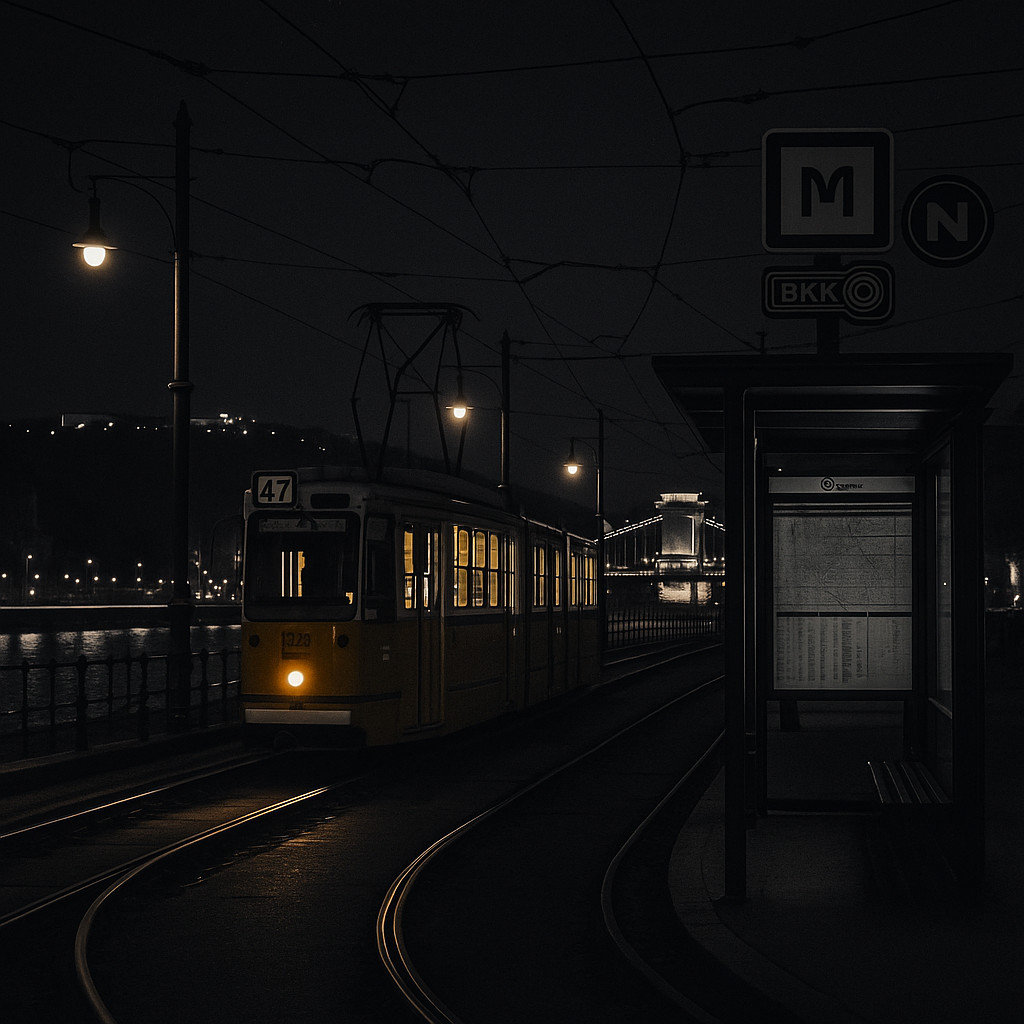
Budapest’s tram system is extensive, clean, and perfect for sightseeing. With over 30 lines, trams are the most scenic way to experience the city’s daily rhythm.
The No. 2 tram is particularly famous. It runs along the Danube promenade on the Pest side, offering views of the Hungarian Parliament, Chain Bridge, and Buda Castle — making it one of the most beautiful tram rides in the world.
Other useful lines include:
- Trams 4 and 6: Run 24 hours a day, connecting Buda and Pest via Margaret Bridge and covering major areas like Oktogon and Blaha Lujza tér.
- Tram 19 and 41: Travel along the Buda riverbank with views of the bridges.
(Read more about the city’s landmarks in Bridges of Budapest — Stories Across the Danube.)
Tips for Using Trams
- Validate your ticket before boarding.
- Sit on the Danube side for the best views (especially on Tram 2).
- During rush hours (8–9 a.m. and 5–6 p.m.), expect crowded carriages.
Buses, Trolleybuses and Boats
Buses
Budapest’s bus network covers areas not reached by trams or metro lines, especially in the hilly Buda districts. Routes are numbered and clearly displayed at stops. Main transfer hubs include Széll Kálmán tér, Astoria, and Deák Ferenc tér.
Night buses (numbers beginning with 9) operate after midnight, providing 24-hour mobility across the city.
Trolleybuses
Trolleybuses (electric buses connected to overhead wires) operate mainly in Pest, offering quiet and eco-friendly transport. Line 70 runs through key central areas, including Andrássy Avenue and Oktogon.
Boats on the Danube
Budapest also integrates boat lines into its public transport network — a unique and scenic option. Operated by BKK, the D11 and D12 boat routes travel between Margaret Island, the Parliament, and the southern docks, passing under all major bridges. These are regular public ferries, not tourist cruises, and you can use standard BKK tickets.
For dedicated sightseeing cruises, see our Danube River Cruise Budapest guide.
Tickets, Passes & Travel Cards
Tickets and passes are valid on all metro, tram, bus, trolleybus, and boat lines operated by BKK. Each ticket must be validated before boarding (or before entering the metro area).
Where to Buy
- BKK purple ticket machines (available 24/7 at metro and tram stops).
- Customer service centres (at Deák Ferenc, Keleti, Nyugati).
- Mobile app: BKK Futár (English interface).
- Most newspaper kiosks.
Ticket Types and Prices
- Single ticket: Valid for one continuous ride (no transfers).
- 30-minute ticket: Valid for unlimited transfers within 30 minutes.
- 90-minute ticket: Ideal for multiple stops and changes.
- 24-hour travel card: Unlimited rides on all BKK lines for one day.
- 72-hour travel card: Great for short stays and city sightseeing.
- 7-day travel card: Perfect for longer visits.
- Budapest Card: Includes public transport, museum entries, and discounts at attractions.
(See our detailed guide on Budapest Card — Is It Worth It?.)
Validation
Insert your paper ticket into the orange machine at station entrances or tram/bus doors. For mobile tickets, scan the QR code at the validator. Failure to validate may result in fines.
Tips for Tourists Using Public Transport in Budapest
- Safety: Public transport in Budapest is safe and patrolled regularly. Keep an eye on your belongings during rush hour.
- Language: All ticket machines and apps are available in English.
- Best time to travel: Avoid rush hours (7:30–9:00 a.m. and 4:30–6:00 p.m.) for a more comfortable ride.
- Transfers: Most lines intersect at Deák Ferenc tér, making it easy to switch between metro, tram, and bus.
- Airport access: Use Bus 100E from Liszt Ferenc Airport to Deák Ferenc tér.
- Taxis vs public transport: Official taxis (Főtaxi, Bolt) are fine, but public transport is faster and cheaper in the city centre.
- Accessibility: Many trams and metro stations (especially M4) are wheelchair-accessible.
Night Transport
Budapest’s night bus network ensures that the city never sleeps. From midnight to around 4:30 a.m., buses marked with a 9 or 900 series number connect all major districts. Tram lines 4 and 6 also run 24 hours on the Grand Boulevard, making them reliable for late-night travellers.
Sustainability and Comfort
Budapest is committed to improving sustainability through modern hybrid buses, bike-sharing networks, and electric trams. You can also combine public transport with walking or cycling — the MOL Bubi system allows short bike rides between metro or tram stops.
For a greener journey, explore the city on foot after disembarking — read more in Getting Around Budapest on Foot.
Conclusion — Moving Through the City’s Rhythm
Using public transport in Budapest is not just convenient; it’s part of the city’s experience. From the nostalgic yellow M1 metro to the scenic Tram 2 gliding along the Danube, every journey reveals another angle of the Hungarian capital.
Combine it with a Budapest Walking Tour to see how the city’s rhythm changes between its hills, riverbanks, and grand boulevards. In Budapest, every ride connects more than destinations — it connects stories, views, and moments that make the city unforgettable.