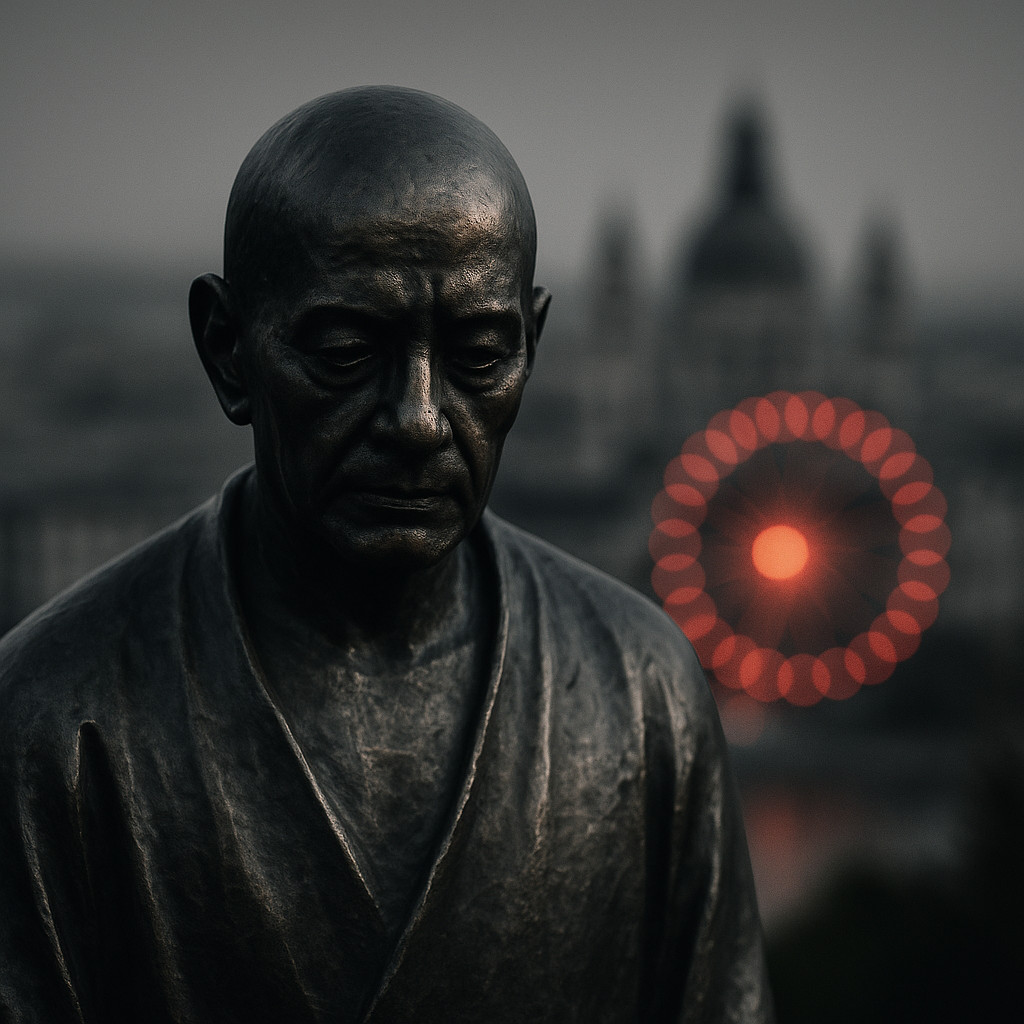
Where Silence Meets the Sky
Tucked away on the quiet slopes of Gellért Hill, the Philosophers’ Garden is one of Budapest’s most secret viewpoints — a place where stone, nature, and thought blend into calm perfection.
Unlike the crowded terraces of the Citadella, this garden offers a space for reflection. Here, statues of the world’s great spiritual leaders stand in a silent circle, overlooking the Danube River and the city’s eternal skyline.
If you’ve visited the Citadella Viewpoint or climbed to the Elizabeth Lookout, you’ll find this place entirely different — smaller, humbler, but infinitely more peaceful.
The Garden of Wisdom
The Philosophers’ Garden (Filozófusok kertje) was created in 2001 to honor the great spiritual minds who shaped human history.
At its center stands Jesus, surrounded by Buddha, Gandhi, Laozi, Abraham, and other wise figures, each sculpted in harmony, not hierarchy. Their circle faces the city, symbolizing dialogue between cultures and faiths — a reminder that wisdom belongs to everyone.
The sculptures by Nándor Wagner, a Hungarian artist who lived in Japan, are both modern and ancient in feeling. Their stone faces reflect the same serenity that defines the garden itself.
A Hidden View of the Danube
Walk past the trees, and suddenly, the city appears before you — the Parliament, the Chain Bridge, and the St. Stephen’s Basilica gleaming in the distance.
The sound of traffic fades, replaced by wind and birds. The Philosophers’ Garden offers one of the most cinematic angles of Budapest, especially at sunset, when golden light falls over the statues and the Danube glows below.
If you loved the panoramic calm of Gellért Hill Views or the dreamlike serenity of Normafa Viewpoint, this lookout will feel like a meditation.
How to Get There
The Philosophers’ Garden sits near the top of Gellért Hill, just a short walk from the Citadella or the Gellért Hotel.
Follow the paths winding through green slopes and you’ll find a simple sign leading to the garden. The walk is about 20 minutes uphill — steep but rewarding.
At the top, benches invite you to rest and breathe. It’s one of those places where time slows down naturally.
When to Visit
Visit early in the morning for solitude or late in the afternoon when the light softens and the Danube glows amber.
Autumn paints the trees in deep orange and red, creating a frame of color around the statues. In spring, the garden blooms gently — a reminder that even philosophy feels lighter under sunlight.
More to Explore Nearby
After enjoying the view, you can descend toward Gellért Thermal Bath or explore the Liberty Bridge, one of the most beautiful crossings in Budapest.
If you’re in the mood for another viewpoint, visit the nearby Citadella — a short walk uphill — or the tranquil Gellért Hill Cave Chapel at the base.
Each represents a different form of reflection: the Citadella’s grandeur, the Chapel’s devotion, and the Philosophers’ Garden’s quiet truth.
A Place Beyond Words
At sunset, the statues seem alive — their faces illuminated by the fading light, their shadows stretching toward the river. The air turns gold, and Budapest below looks infinite.
The Philosophers’ Garden isn’t a tourist attraction; it’s an experience — a space to think, to breathe, and to see the world from a gentler height.
As the wind brushes the leaves and the last light touches the Danube, you’ll understand why those who find this place never forget it.
Philosophers’ Garden — Location on the Map
Hidden atop Gellért Hill, the Philosophers’ Garden invites visitors to pause and reflect amid its statues of great thinkers and stunning city views. Overlooking the Danube and Buda Castle, this peaceful terrace offers a rare blend of silence, beauty, and inspiration away from the crowds.