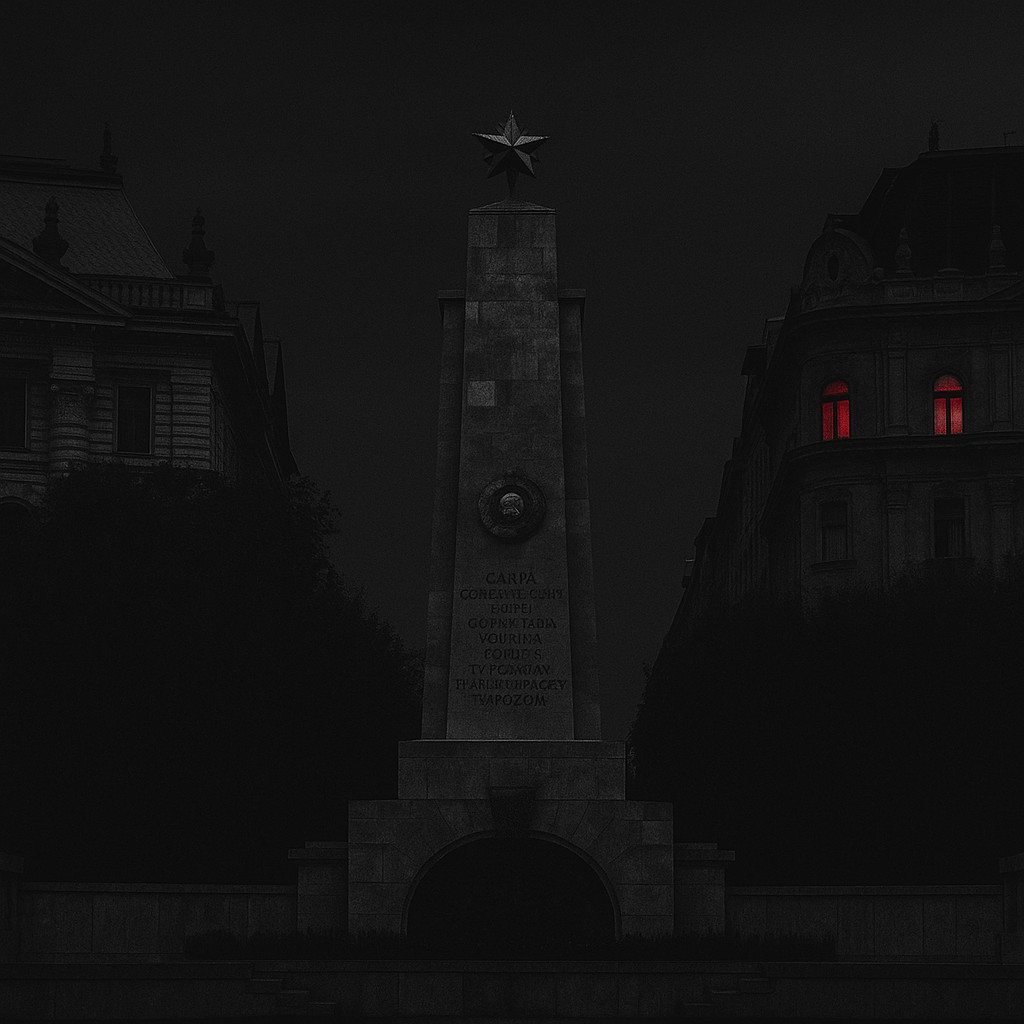
In the very heart of Budapest, between the Hungarian Parliament Building and the tree-lined Andrássy Avenue, lies a space that holds more emotions than any other in the city — Liberty Square Budapest (Szabadság tér).
This plaza, elegant and haunted in equal measure, is a reflection of Hungary’s most turbulent century: filled with grandeur, memory, and contradiction.
Few squares in Europe combine such architectural harmony with such complex symbolism. To walk through Liberty Square is to walk through freedom and loss, triumph and tragedy — all told through bronze statues, marble façades, and the quiet rustle of leaves.
The Geometry of Power
Liberty Square Budapest was built in the late 19th century on the site of a former military barracks — a place once associated with oppression. Its very name, Szabadság tér, meaning “Square of Freedom,” celebrates the transformation from control to liberty.
Today the square is surrounded by architectural masterpieces of the Belle Époque: the National Bank of Hungary, the former U.S. Embassy, and several grand residential buildings that whisper the luxury of a vanished era. Their symmetry creates a frame around the park-like core — a rare balance between strength and softness.
From above, the square forms a perfect geometric pattern, reflecting the rationality of the Austro-Hungarian age. Yet within that order, the emotions of history stir restlessly.
The Monuments of Memory
No visit to Liberty Square Budapest is complete without confronting its monuments — the physical manifestations of the city’s struggle to remember.
At the southern end stands the Soviet War Memorial, topped by a gold star and commemorating the Red Army soldiers who died liberating Budapest from Nazi occupation in 1945. It remains the only Soviet monument still standing in central Budapest — an enduring subject of controversy and debate.
Facing it across the park is the Monument to the Victims of the German Occupation, unveiled in 2014. Its neoclassical façade and angelic figures attempt to symbolize Hungary’s suffering during World War II — yet many citizens view it as a distortion of history. Around its base, spontaneous tributes of photographs, shoes, stones, and letters form a counter-memorial created by the people themselves.
Between these two opposing monuments, the square becomes a living conversation about responsibility, grief, and remembrance.
Just steps away, a bronze statue of Ronald Reagan strides toward the Parliament — a symbol of Cold War victory and Hungary’s path back to democracy. His presence here, under the trees of Szabadság tér, reminds visitors how history repeats, reforms, and redefines freedom.
The Architecture of Elegance
Despite its heavy history, Liberty Square remains one of Budapest’s most beautiful spaces. The façades around it are masterpieces of late-19th-century architecture — monumental, yet deeply human in proportion. The former Stock Exchange Palace, now the headquarters of the National Bank, dominates the skyline with its ornate sculptures and carved stone columns.
Cafés and quiet benches line the park’s edges, where locals read or sip coffee under chestnut trees. It’s not unusual to see children playing near fountains that sparkle under the light of sunset — a scene that contrasts sharply with the gravity of the surrounding monuments.
This juxtaposition is Budapest itself: pain and beauty, always side by side.
The American Connection
Liberty Square has long been a symbol of international dialogue. The U.S. Embassy, located here since World War II, played a significant role during the communist era, when Hungarians would gaze at its flag through the iron gates, imagining freedom beyond the borders.
Today, the embassy’s neoclassical façade and guarded entrance remain a potent reminder of those divided decades — yet the atmosphere has softened. The area around it has become a peaceful urban garden, where life moves forward, even as history lingers.
A Walk Through Time
Start your walk from the Parliament side, where the wide stone promenade opens toward the square’s center. As you move through, notice how the trees filter the city’s noise, creating a sense of calm despite the traffic beyond.
Pause by the Reagan statue, then continue to the Soviet War Memorial — the golden star catching the late sunlight. From there, cross the lawn toward the German Occupation Memorial. It’s an emotional experience; one that reveals how Liberty Square Budapest serves not just as a place of beauty, but of national self-reflection.
A few minutes away, you’ll reach the Shoes on the Danube Bank — another memorial that deepens the conversation begun here. Both sites remind us that freedom is not permanent, but constantly renewed through remembrance.
Surrounding Landmarks
From Liberty Square, every direction leads to another story. Walk south to the St. Stephen’s Basilica to see the spiritual heart of Budapest. Stroll west toward the Chain Bridge for river views that connect past and present. Head east to the Andrássy Avenue — a boulevard of embassies and elegance.
Or simply stay. Sit beneath the trees and watch the blue hour descend over the Parliament’s spires. In this moment, the square’s contradictions — its wounds, its pride, its serenity — merge into something profoundly human.
Why Liberty Square Budapest Matters
In every sense, this square embodies Hungary’s long journey through tyranny, occupation, and independence. Its name is not a boast but a vow — a reminder of what the country has fought to preserve.
As you walk its paths, surrounded by bronze figures and whispering trees, you begin to understand the soul of Budapest: proud, scarred, but forever luminous.
Liberty Square Budapest is not a destination; it’s a dialogue — between memory and meaning, between past and present, between the light of freedom and the shadows that shaped it.
Liberty Square Budapest — Location on the Map
Between the Parliament and St. Stephen’s Basilica lies Liberty Square — a powerful open space where beauty and memory intertwine. Its grand design, Soviet memorial, and controversial statues remind visitors that freedom in Budapest has always been both celebrated and hard-won.