There are bridges that connect cities, and there are bridges that connect souls.
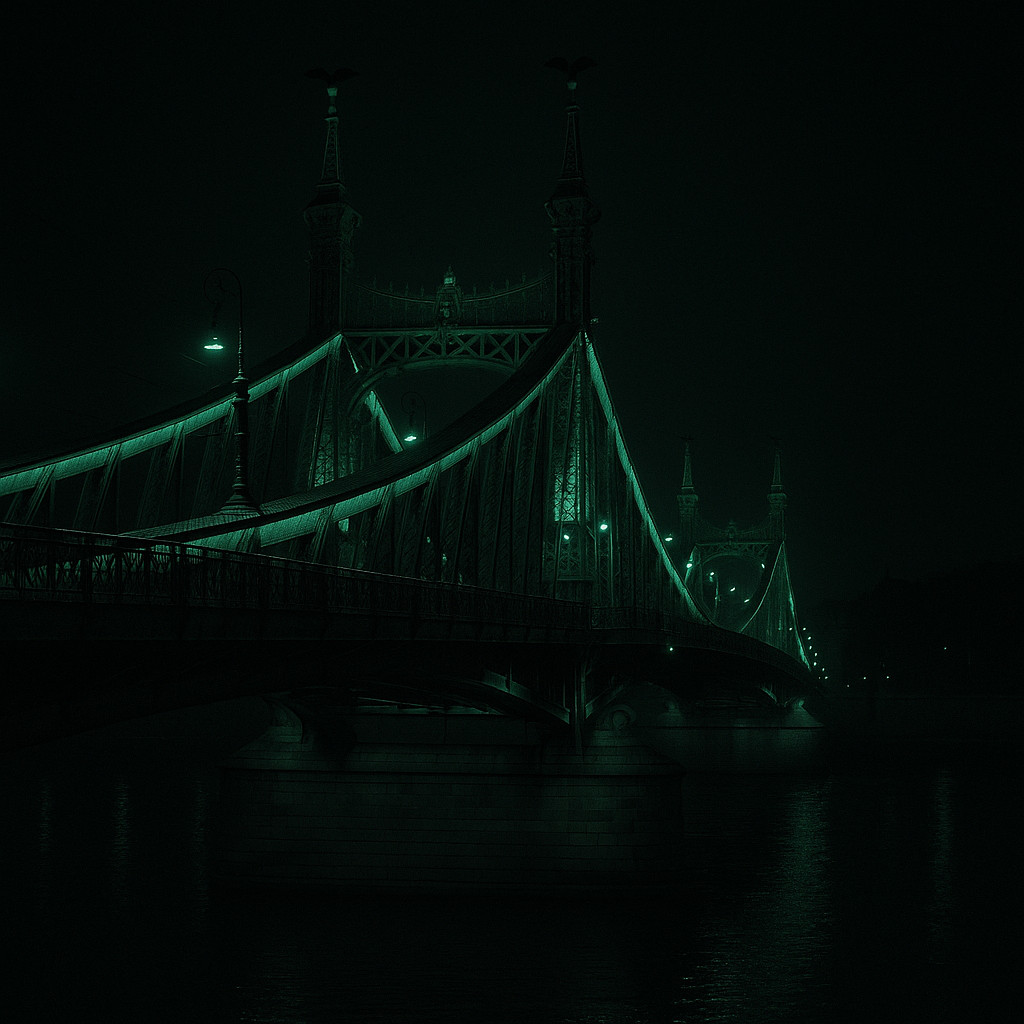
The Liberty Bridge Budapest (Szabadság híd) belongs to the second kind — an iron poem that glows in green above the Danube, linking the historic heart of Buda and Pest like an emerald thread between two worlds.
Elegant yet rebellious, it is not only one of the city’s architectural treasures but also one of its most beloved gathering spots, a symbol of freedom — both in name and in spirit.
The Story of Freedom Forged in Iron
Built between 1894 and 1896, the Liberty Bridge Budapest was the shortest of the city’s great crossings, but it carried perhaps the deepest meaning.
It was inaugurated by Emperor Franz Joseph himself, who drove the final silver rivet into its structure — an act that symbolized unity between Hungary and the empire.
Originally named after the emperor, it became the “Bridge of Liberty” after World War I, when Hungary reclaimed its identity. Today, its art nouveau spires crowned with Turul birds — mythical guardians of Hungary — stand as eternal watchmen over the Danube.
A Green Jewel of the Danube
The bridge’s color, a rich green that glows vividly under moonlight, makes it instantly recognizable.
Its design, by János Feketeházy, combines engineering brilliance with artistic grace. The latticework of wrought iron feels both industrial and organic, like veins carrying the lifeblood of Budapest itself.
At night, when the Danube River reflects its shimmering lights, the bridge seems almost to float — a dream suspended between the Gellért Hill and the bustling Great Market Hall.
Standing there, you feel both the pulse of the city and the calm of eternity.
The Spirit of Liberty
Unlike other bridges in Budapest, the Liberty Bridge has a unique personality — part monument, part meeting place.
During summer evenings, locals and travelers gather along its iron frame, watching the sunset from its arches as trams rumble gently across.
It’s one of the few bridges in the world where people sometimes sit directly on the railings — not for thrill, but for peace.
Here, conversations stretch into the night, musicians play softly, and the green glow of the bridge reflects in the faces of those who simply want to feel the city breathe.
This informal ritual began after renovations in the early 2000s, when Budapest briefly closed the bridge to traffic. The people claimed it as their own, and it’s remained a symbol of unity and life ever since.
A Bridge Between Icons
The Liberty Bridge Budapest lies at the southern edge of the city center, perfectly positioned between history and modernity.
On the Buda side rises Gellért Hill and the Gellért Thermal Bath — one of Europe’s most elegant art nouveau spas.
On the Pest side stands the Great Market Hall, where the scent of paprika, Tokaj wine, and fresh pastries fills the air.
Crossing the bridge feels like walking through an invisible doorway between the sensual and the sacred — from healing waters to the pulse of commerce, from serenity to motion.
The View That Defines Budapest
From the midpoint of the Liberty Bridge, the view of Budapest is unforgettable.
To the north, the spires of the Parliament Building rise like a crown over the river. To the south, the evening lights stretch toward the modern bridges of the 21st century.
Below, the Danube flows silently, carrying centuries of memory — of emperors, revolutions, and rebirths.
Stand there at dusk, when the air turns silver and green, and you’ll understand why this bridge carries the name Liberty.
Architectural Grace and Strength
Though graceful, the bridge is no fragile beauty. It withstood bombings during World War II, collapsing only partially before being rebuilt in 1946 — the first of Budapest’s bridges to reopen after the war.
Every rivet and beam reflects the resilience of the Hungarian spirit. Its Turul birds, wings spread in eternal flight, have become silent symbols of protection — watching the city heal, transform, and rise again.
A Living Landmark
Today, Liberty Bridge Budapest is both an icon and a playground.
Festivals, night walks, and photography sessions are part of its rhythm. It’s a favorite subject for artists and filmmakers, who capture its hypnotic symmetry and gentle glow.
At sunrise, the bridge turns to silver.
At sunset, it burns green and gold.
And when night deepens, it becomes a beacon of the city’s undying energy.
How to Visit
- Getting there: Tram lines 47 and 49 cross the bridge, connecting Pest’s Liberty Square and Buda’s Gellért Hill.
- Best time: Sunset or after dark — when the lamps ignite and the iron turns emerald under the night sky.
- Nearby: Walk to Rudas Baths, the Ottoman masterpiece on the opposite bank, or climb Gellért Hill for panoramic views that make the bridge shine like a ribbon of light.
You can also end your evening nearby with a drink at the Leo Rooftop Bar, where the view of the bridge at night feels like a dream in green.
More Than a Bridge
In a city where every corner tells a story, the Liberty Bridge stands for hope — the eternal idea that beauty and freedom are inseparable.
It’s where history and humanity meet halfway, above the current of the Danube.
When you walk across it, you don’t just cross the river.
You cross time itself.
Liberty Bridge Budapest — Location on the Map
Painted in a signature green hue, Liberty Bridge connects Buda and Pest with timeless grace. Originally opened by Emperor Franz Joseph, this Art Nouveau structure has become a beloved landmark — where history, architecture, and the city’s youthful spirit meet above the Danube.