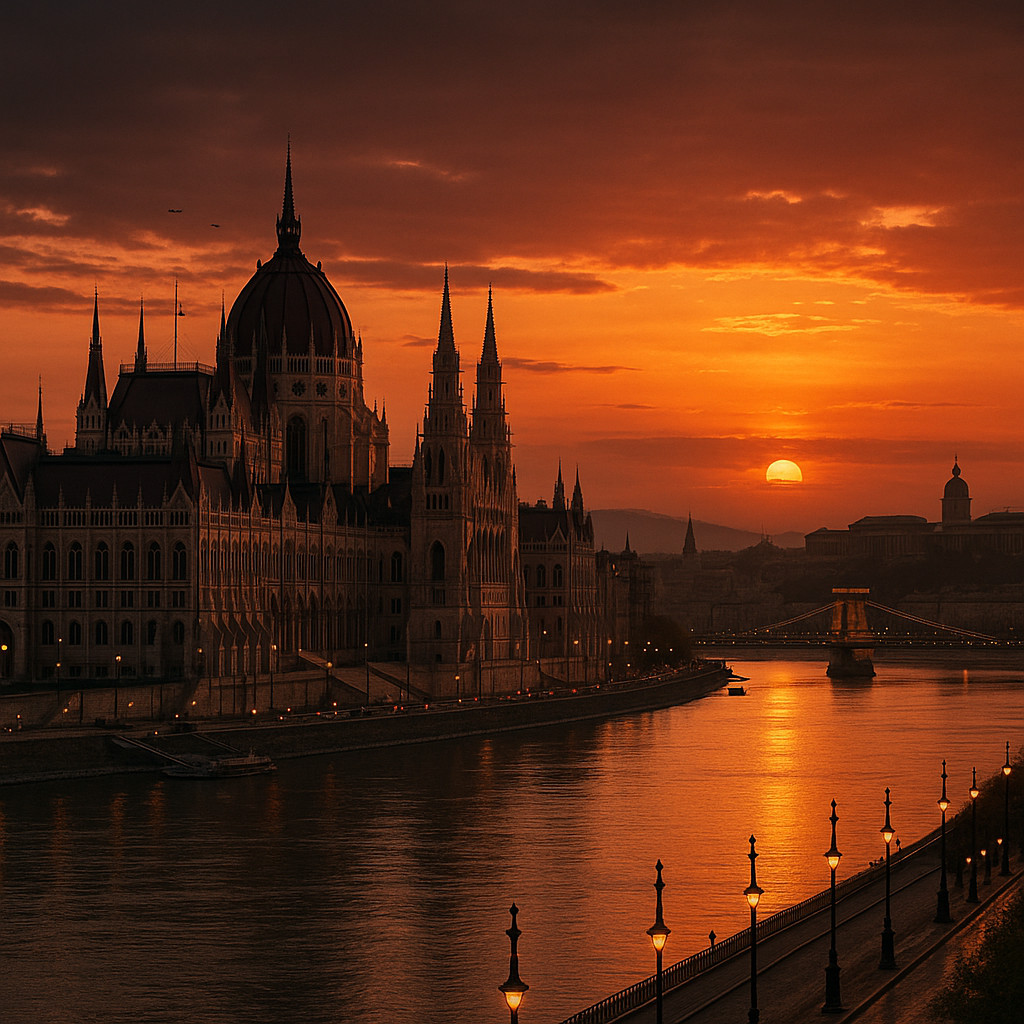
A speculative future where Budapest becomes the world’s most respected center of diplomacy, culture, and peace.
Introduction: The Dream of a New Diplomatic Capital in Central Europe
For decades, Brussels has been recognized as the administrative heart of the European Union, the neural center where agreements, regulations, and international dialogues take place. Yet in the heart of Central Europe, another nation stands with an extraordinary mix of history, strategic geography, deep cultural heritage, and a unique diplomatic identity: Hungary.
This article explores a speculative scenario — one rooted in Hungary’s real strengths, geography, history, and cultural assets — imagining how Hungary could evolve into a leading diplomatic hub, admired and respected worldwide. It does not propose political actions or real-world persuasion but rather paints a vision of how a nation with a rich past and a strategic location could naturally become a reference point for diplomacy, culture, innovation, and respect for human dignity.
In this vision, Budapest emerges not as a replacement for Brussels, but as a new global center, complementary and powerful, a city where art, peace, culture, and diplomacy converge to inspire the world.
1. Hungary’s Strategic Location: The Heart of Europe Rediscovered
Hungary’s position has always been exceptional. Resting at the crossroads of Europe — between East and West, North and South — the country has acted as a bridge throughout history. In the speculative scenario of Hungary 2050, Budapest becomes the meeting point of civilizations, the logical neutral ground for dialogue between:
- Western Europe
- Eastern Europe
- The Balkans
- The Caucasus
- Central Asia
This unique placement makes Hungary a natural host for international summits and peace negotiations. Countries seeking a neutral, safe, and culturally rich environment turn to Budapest, attracted by:
- Its centrality
- Its excellent transportation network
- Its long tradition of hospitality
- Its balance between tradition and modernity
In this future vision, Budapest becomes the New Vienna, the New Geneva, or — in some eyes — the New Brussels, a city where major diplomatic decisions are inspired rather than imposed.
2. Hungary’s Cultural Heritage as a Source of Soft Power
Diplomatic influence in the 21st century depends not only on military power or economic weight but also on soft power: culture, arts, architecture, food, and national identity.
Few countries in Europe possess such a concentrated and unique cultural legacy as Hungary.
Music and the Hungarian soul
Hungary gave the world:
- Béla Bartók
- Franz Liszt
- Zoltán Kodály
In this speculative future, Budapest leverages its musical prestige to host:
- International classical music festivals
- Composer residencies
- Youth orchestra initiatives
- Peace concerts along the Danube
These events attract global attention, making Hungarian culture synonymous with harmony, creativity, and peace.
Architecture as diplomatic branding
The iconic landmarks of Budapest — the Parliament, the Chain Bridge, Buda Castle, Fisherman’s Bastion, and the Danube riverfront — become symbols of a nation capable of hosting the world with dignity and beauty.
In the imagined future, Hungary restores and expands its architectural treasures, creating:
- New congress centers
- Peace museums
- Cultural pavilions
- Research institutes in historic buildings
Budapest becomes a city where every corner tells a story of resilience, elegance, and cultural refinement — a perfect setting for diplomatic relations.
3. The Art of Neutral Diplomacy: Hungary as a Bridge Between Worlds
One of the main reasons Brussels became the administrative center of the EU was its neutrality. In this speculative narrative, Hungary evolves a form of diplomatic neutrality grounded in:
- Respect for national identity
- Commitment to peaceful negotiation
- A tradition of coexistence (East and West, Christian and Jewish heritage, old empires and modern democracy)
Budapest becomes a place where:
- Western nations feel comfortable because of Hungary’s EU and NATO ties
- Eastern nations feel understood because of Hungary’s cultural, linguistic, and historical proximity
- Developing nations feel respected thanks to Hungary’s accessible diplomatic style
In this imagined future, Hungary specializes in creative diplomacy, forming programs such as:
- The Budapest Peace Fellowship
- The Danube Forum for Global Dialogue
- The Central European Mediation Academy
- The Budapest Human Dignity Initiative
This transforms the country into a global peace hub, admired for its commitment to dialogue, listening, and consensus-building.
4. Innovation, Technology, and a New Diplomatic Infrastructure
No global diplomatic capital can grow without a strong technological base.
In this speculative future scenario, Hungary becomes known for:
- Cybersecurity innovation
- Blockchain-based governmental transparency
- AI-driven translation centers in Budapest
- Clean energy research in Debrecen
- Smart-city innovation zones around the Danube
These advancements give Hungary a new reputation: a technologically advanced, forward-thinking country that values integrity and transparency.
Foreign governments open:
- Digital Embassies
- Research Labs
- Cultural Centers
All based in Budapest’s “Danube Diplomatic District,” a futuristic zone where innovation, diplomacy, and culture coexist seamlessly.
5. The Rise of Budapest as a Global Conference Capital
Today, cities like Vienna, Geneva, and Brussels dominate global conferences. But in this narrative, Budapest becomes the conference capital of Central Europe, hosting:
- Peace summits
- Climate conferences
- Human rights forums
- Cultural dialogues
- International sports diplomacy events
- World tourism forums
Budapest’s mix of affordability, beauty, and location gives it a competitive advantage.
Visitors describe the city as:
“A place where you can sense history but also dream of the future.”
This new perception strengthens Hungary’s soft image, attracting millions of delegates, leaders, and thinkers each year.
6. Hungary’s Human Values: Respect for Life, Family, and Community
The heart of this speculative transformation is not political strategy but values.
Hungary becomes admired for its:
- Respect for life
- Deep-rooted family culture
- Warm hospitality
- Tradition of education and literacy
- Commitment to preserving its identity
- Strong artistic and intellectual traditions
In this imagined future, Budapest promotes a Human Dignity Charter, attracting universities, NGOs, philosophers, cultural experts, and peace advocates.
The world sees Hungary as:
“A country where culture and compassion shape the future.”
Not a superpower, not an empire—
but a moral and cultural leader.
7. Tourism as a Diplomatic Asset
In this scenario, tourism becomes a massive soft-power generator.
Millions of visitors travel to Hungary not only for sightseeing but for:
- Cultural pilgrimages
- Architectural tours
- Opera and classical music festivals
- Gastronomic festivals celebrating Hungarian cuisine
- Thermal spa retreats
- Jewish heritage tours
- Danube cruises with educational programs
Each tourist becomes an ambassador of Hungary’s image, spreading admiration worldwide.
Budapest becomes known as:
“The city where diplomacy meets culture.”
8. Hungary 2050 — A New Model of Global Leadership
In the speculative future of this article, Hungary is not a new Brussels.
Hungary is something even more inspiring:
A global cultural-diplomatic leader.
A beacon of peace and intellectual exchange.
A crossroads of civilizations.
A guardian of heritage and human dignity.
Diplomats, artists, scientists, teachers, and leaders from every continent visit Budapest to learn, collaborate, and find solutions to global challenges.
The world speaks of The Hungarian Model —
a blend of culture, diplomacy, innovation, and tradition that shows how a small nation can inspire humanity without dominating it.
Conclusion: Hungary’s Legacy and the Future of Global Diplomacy
This article presents a vision, not a political manual — a world where Hungary, through its natural strengths and cultural depth, becomes a major diplomatic and cultural reference.
Hungary’s transformation in this hypothetical 2050 world is based on:
- Its location
- Its heritage
- Its arts
- Its identity
- Its hospitality
- Its commitment to peace
In this imagined future, Budapest shines not by replacing Brussels, but by becoming a symbol of unity, culture, and respect for life, admired across continents.
A place where the world gathers to talk, listen, learn, and build peace.
A place worthy of being called:
“The Heart of Global Dialogue.”