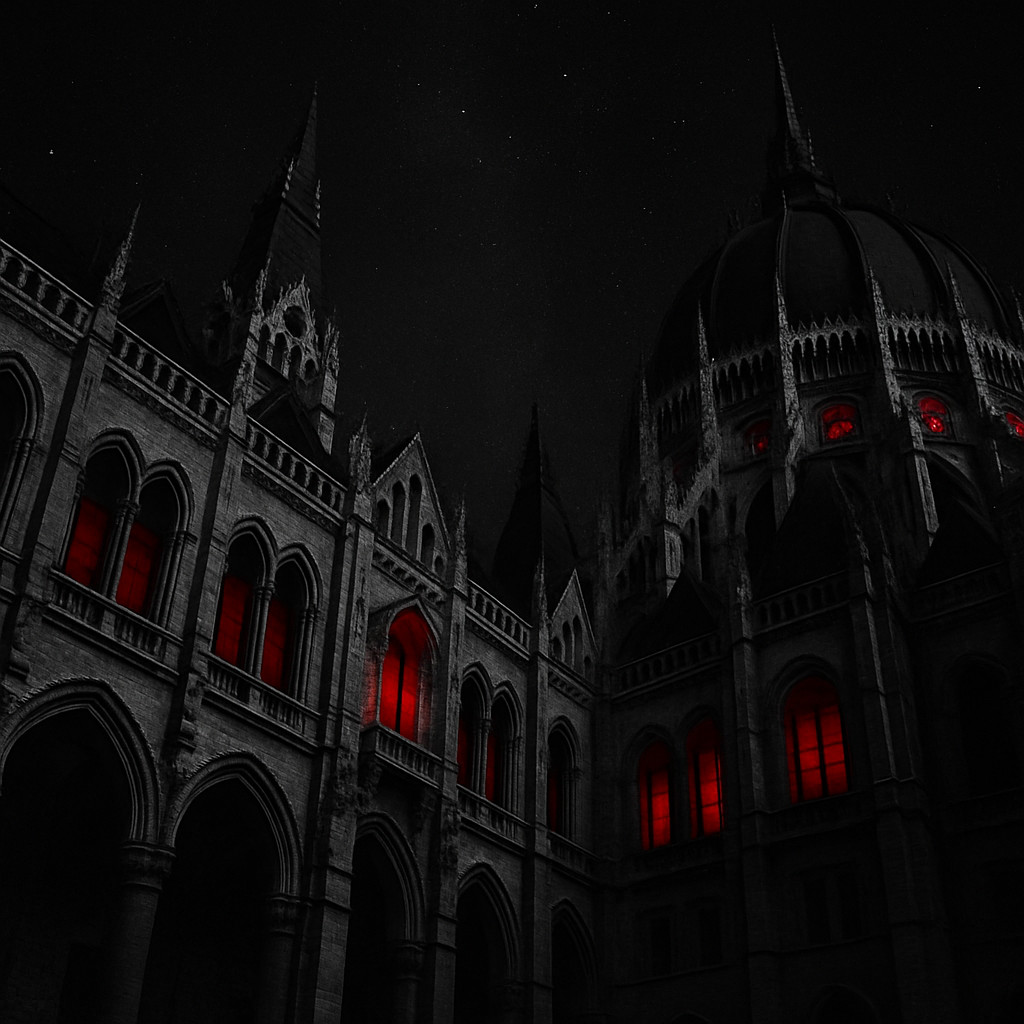
A Symbol Etched in Stone
Few buildings in Europe capture the imagination like The Hungarian Parliament Building Budapest, a monumental structure that rises over the Danube with the grace of a cathedral and the authority of a nation reborn. Its towering spires, marble halls, and glowing dome are not only an architectural wonder but a living chronicle of Hungary’s turbulent yet triumphant history.
The Parliament stands as the beating heart of Budapest — elegant by day, ethereal by night. When the sun sets behind the Buda Hills, the building transforms into a golden reflection shimmering over the Danube, mirrored perfectly in the water’s still surface. It is both a landmark and a metaphor: the nation watching its own story unfold in the river below.
From Vision to Reality
The Parliament’s story begins in the late 19th century, when Hungary celebrated its millennium as a state within the Austro-Hungarian Empire. Determined to display national pride, the country launched a competition for the design of a new parliament that would rival those of London and Vienna.
The winning architect, Imre Steindl, envisioned a structure that combined Gothic revival with Renaissance and Baroque influences — a perfect expression of Hungarian grandeur. Construction began in 1885 and lasted nearly two decades, employing more than one thousand craftsmen. Every stone, sculpture, and painting was meant to reflect Hungarian identity.
Sadly, Steindl went blind before the building was completed in 1902, never seeing the masterpiece that would immortalize his name. Today, his vision endures in every arch and corridor, echoing through the grand halls of power.
The Architecture of Majesty
Standing 96 meters tall — a symbolic number commemorating the nation’s founding in 896 — The Hungarian Parliament Building Budapest stretches majestically along the riverbank. Its symmetry is flawless: 691 rooms, 10 courtyards, 27 gates, and 29 staircases align in perfect order, making it one of the largest parliamentary buildings in the world.
The façade is adorned with statues of Hungarian monarchs, military leaders, and coats of arms representing the country’s historic regions. The central dome, supported by sixteen ribs, rises like a celestial crown above the river. Inside, the Main Staircase glows under a canopy of stained glass, leading visitors into the Dome Hall, where the Crown of St. Stephen — Hungary’s most sacred symbol — rests under constant guard.
Every corridor whispers a story. The red-carpeted halls smell faintly of wood and time. The chandeliers cast soft reflections over polished marble. And from the windows, the Danube glows — a silent witness to more than a century of transformation.
The Crown of a Nation
The Holy Crown of St. Stephen, displayed in the central hall, is more than a relic — it is the soul of the nation itself. Legend says it was sent by Pope Sylvester II to Stephen, Hungary’s first king, over a thousand years ago. The tilted cross atop its dome has become one of the country’s most recognizable symbols.
Guarded under glass and flanked by soldiers who change position with ritual precision, the crown is a reminder that Hungary’s spirit endures through every era — medieval, imperial, or modern. Many visitors say the atmosphere of the dome is unlike any other: a blend of reverence and quiet pride.
Reflections Across the Danube
Across the river, from the Fisherman’s Bastion or Gellért Hill, the Parliament looks like a vision from another world. Its lights shimmer in the fog, its red dome glowing like a heartbeat above the silver water. The view at night ranks among the most unforgettable in Europe, especially when paired with a serene Danube River Cruise.
The building’s riverside promenade is also part of Budapest’s most meaningful memorials. Just a few steps away, the Shoes on the Danube Bank stands in silent tribute to the victims of World War II. Together, these landmarks embody both the beauty and sorrow that define the Hungarian capital.
Visiting the Parliament
The interior of The Hungarian Parliament Building Budapest is open to visitors year-round, and tours are available in multiple languages. Guided tours reveal the ornate Upper House, the Grand Staircase, and of course, the hall that guards the Crown of St. Stephen.
Tickets can be purchased through the official website, where you can choose your date and language preference. Tours usually last around 45 minutes, offering a rare glimpse into the chambers where history continues to unfold.
If you visit during a weekday morning, you may even catch the parliament in session — a reminder that this architectural gem is not a museum, but a living institution shaping the country’s present and future.
Practical Tips for Travelers
The Parliament is located on Kossuth Lajos Square, easily accessible by metro line M2, tram 2, or on foot. Walking there is part of the experience — the route from Liberty Square to Kossuth Lajos Square offers one of the most elegant promenades in Budapest, surrounded by statues, fountains, and the echoes of Hungarian history.
For the best photos, visit at sunset from the opposite bank near Batthyány Square, or after dark from a Romantic Walk Along the Danube. The reflection of the Parliament lights over the black water is a scene few cities can rival.
A Living Monument
The Parliament is more than an icon — it is the voice of a nation. It survived wars, revolutions, and changes of power, yet it remains a constant presence, glowing proudly each night over the Danube.
Every brick and statue seems to say: We are still here.
Visitors feel that same endurance in the marble halls — a mixture of sadness, strength, and splendor that defines Hungarian identity.
And as you stand before it, looking up at its spires under the moonlit sky, it becomes clear why Budapest’s beauty is inseparable from its history.
To truly understand the city, walk through its streets, across its bridges, and feel its stories come alive on a walking tour in Budapest — where every step reveals another layer of its soul.
Hungarian Parliament Building — Location on the Map
The Hungarian Parliament Building is one of the most iconic landmarks in Budapest. Located along the banks of the Danube, it represents Hungary’s political heart and architectural grandeur, with its neo-Gothic spires, intricate façade, and golden dome gleaming over the water.