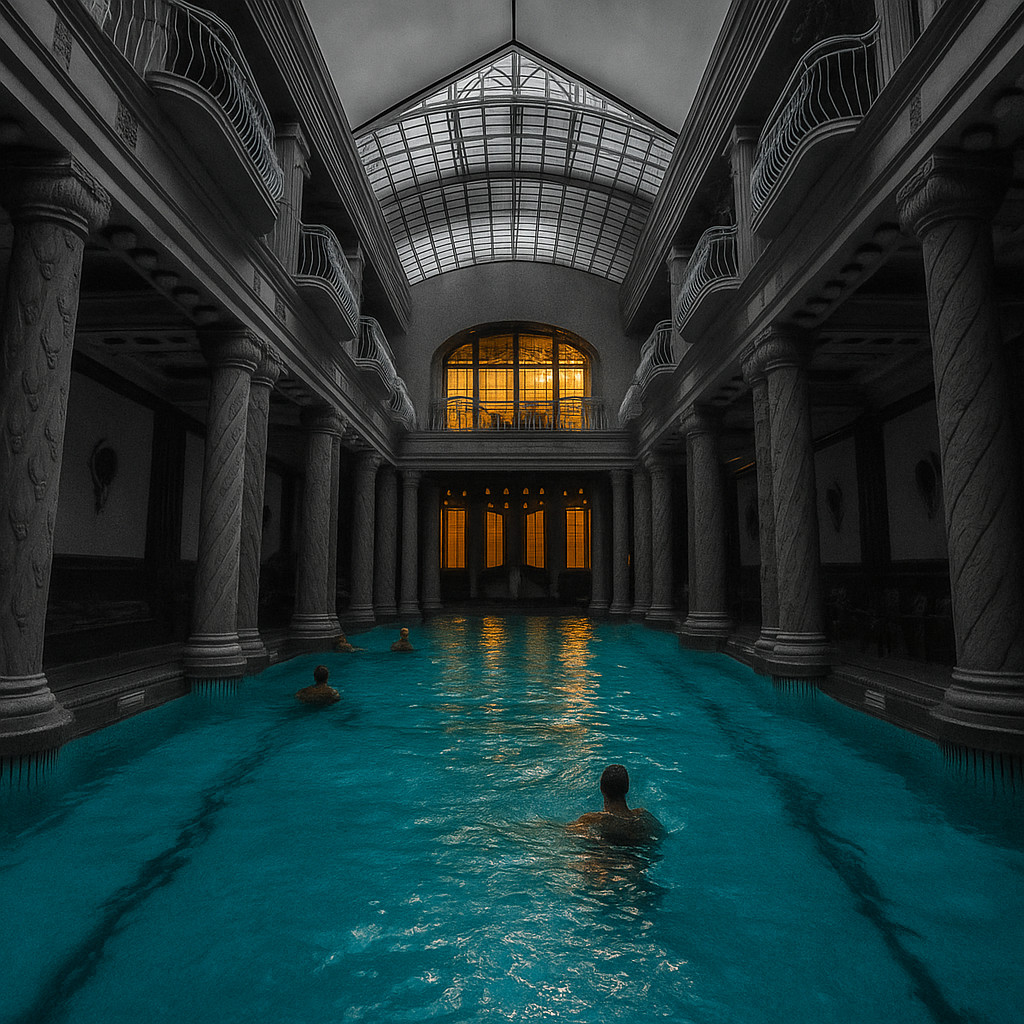
If Széchenyi Thermal Bath is the heart of Budapest’s spa culture, Gellért Thermal Bath Budapest is its soul — a masterpiece of Art Nouveau design where healing meets harmony. Standing proudly at the foot of Gellért Hill, the Gellért Bath has been welcoming travelers since 1918, offering an experience that feels less like a swim and more like stepping into a painting.
The Jewel of the Danube
Set on the Buda side of the Danube, next to the graceful Liberty Bridge, Gellért Thermal Bath Budapest forms part of the legendary Hotel Gellért complex. Its façade, crowned with turrets and mosaics, evokes an age when wellness was art and architecture a language of healing.
Inside, stained glass windows cast jewel-like reflections over turquoise pools. The marble columns, intricate tiles, and ornate balconies remind every visitor that this is not a mere bathhouse — it’s a temple dedicated to water, light, and elegance.
A Century of Healing Tradition
Gellért Thermal Bath Budapest is built over natural springs that have been used since the 13th century. The Ottomans once bathed here; centuries later, Budapest refined it into a palace of wellness. The waters, rich in calcium, magnesium, and sulfate, are believed to treat joint pain and skin conditions while soothing the mind.
Each drop of water carries a fragment of the city’s layered past — medieval monks, Ottoman rulers, and 20th-century travelers all shared the same currents that now flow through its Art Nouveau halls.
Inside the Bath — A Living Work of Art
Stepping inside Gellért is like entering an underwater cathedral. The main hall, with its vast arched ceiling and blue-tiled pool, feels cinematic — a space where whispers echo like music. Two smaller thermal pools on each side maintain different temperatures, allowing you to alternate between warmth and cool relief.
Upstairs, saunas, massage rooms, and private baths extend the ritual. Beyond the ornate halls lies an outdoor wave pool, built in 1927 — a technological marvel of its time that still delights visitors every summer.
For a full immersion into Budapest’s spa world, pair your visit with Rudas Baths Budapest, known for its Ottoman dome, or the majestic Széchenyi Thermal Bath in City Park. Together, they tell the story of Budapest as the City of Spas.
The Art Nouveau Spirit
Nowhere else in the city is Art Nouveau design so intimately connected with wellness. Every mosaic and sculpture has meaning — from water nymphs symbolizing purity to the sinuous forms inspired by nature. Even the iron railings seem alive, as if the building itself were breathing with the rhythm of the pools.
If you walk along Andrássy Avenue Budapest or visit the Hungarian State Opera House, you’ll sense the same architectural harmony that defined early 20th-century Budapest: elegant, precise, and deeply human.
A View of the Danube from the Baths
From the terrace, the panorama unfolds — the shimmering green of Liberty Bridge, the distant Citadella, and the pulse of the Danube below. Few places in Europe offer such a view while soaking in natural thermal water.
When night falls, golden lights reflect on the water’s surface, and the Art Nouveau lamps cast a gentle glow through the mist. It’s no wonder Gellért Thermal Bath Budapest remains one of the most photographed places in the city, rivaling even the Best Sunset Spots in Budapest.
How to Visit Gellért Thermal Bath Budapest
Location
The bath is located at Kelenhegyi út 4, Buda side, directly next to Liberty Bridge and opposite the Central Market Hall on the Pest side. The entrance is shared with Hotel Gellért, whose grand lobby leads to the spa gates.
Getting There
Take Metro Line 4 to Szent Gellért tér station, or tram 47/49 from Pest. If you’re walking, cross Liberty Bridge — it’s one of the most scenic short walks in the city.
Opening Hours and Tickets
The bath operates year-round, though the outdoor wave pool is seasonal. Prices vary depending on services — massage, cabin, or pool-only entry. Tickets and updates are available on the official Gellért Bath website (external link).
The Spa Experience — Then and Now
To locals, Gellért Thermal Bath Budapest isn’t just a luxury; it’s a habit passed down through generations. Elderly Budapesters still come here weekly, sitting in the same pools they visited decades ago. For travelers, it’s a chance to step into history without leaving the present.
Unlike modern spas, Gellért invites you to slow down, to notice the sound of water echoing under domes, to watch sunlight dance on ceramic tiles — to simply be.
Pairing Gellért with Other Experiences
After your visit, stroll across Liberty Bridge to enjoy the Danube promenade or stop for dessert at Gerbeaud Café. For those seeking deeper relaxation, compare your experience with the city’s other great spas in the Best Thermal Baths in Budapest — Ultimate Guide and learn customs from Thermal Bath Etiquette Budapest.
And if you’re exploring hidden corners of the city, the tranquil Philosophers’ Garden nearby offers the perfect viewpoint to reflect after a day of bathing and discovery.
Conclusion
Gellért Thermal Bath Budapest is not merely a spa — it is an encounter with beauty, water, and history. Beneath its stained glass ceilings, the spirit of old Budapest still flows.
Every ripple tells a story of renewal. Every mosaic reflects the city’s devotion to elegance and well-being. Whether you come for healing or wonder, Gellért promises both.
Gellért Thermal Bath Budapest — Location on the Map
At the foot of Gellért Hill, the Gellért Thermal Bath stands as Budapest’s crown jewel of Art Nouveau design. Its mineral-rich pools, ornate tiles, and luminous glass ceilings create an atmosphere of timeless luxury, where centuries-old healing traditions meet architectural splendor.