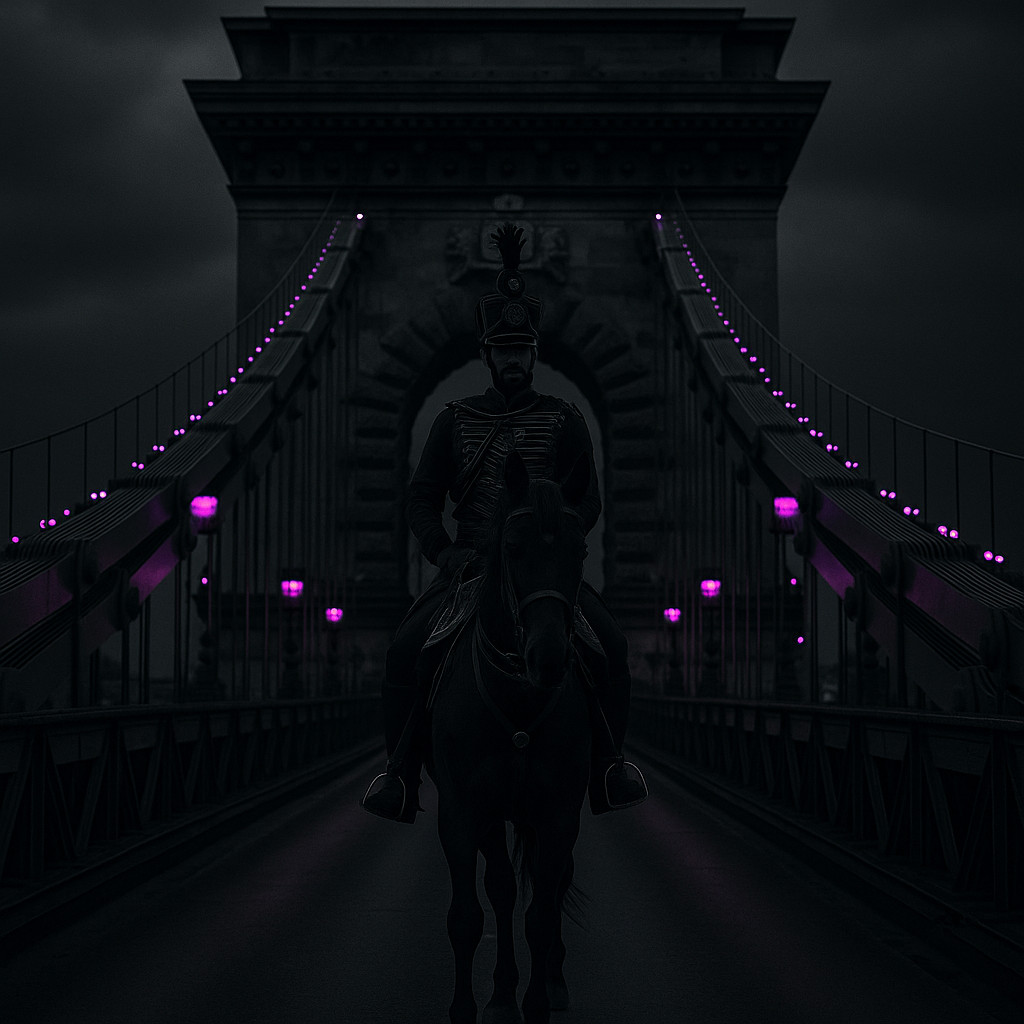
The Bridge That United a Nation
Among all the landmarks that define Hungary’s capital, Chain Bridge Budapest stands as the most symbolic. Spanning the mighty Danube between Buda and Pest, it was the first permanent bridge to connect the two sides of the city — and, in many ways, the one that gave birth to modern Budapest itself.
When you step onto its stone approach and feel the hum of the city beneath your feet, you are walking through nearly two centuries of Hungarian ambition. The bridge’s solemn lions, elegant chains, and glowing lamps reflect not only on the water below, but also on the identity of a nation that has rebuilt itself time and again.
Count Széchenyi’s Vision of Unity
The story of Chain Bridge Budapest begins with Count István Széchenyi, known as The Greatest Hungarian. After being stranded on one side of the river during winter floods, he vowed to create a permanent link between Buda and Pest — two cities that, until then, lived in proud separation.
Designed by the English engineer William Tierney Clark and built under the supervision of the Scottish engineer Adam Clark, the bridge opened in 1849. At that time, it was one of Europe’s longest suspension bridges, a marvel of engineering that placed Budapest on the map of modernity.
Today, you can still sense Széchenyi’s vision alive in its stones. As you cross from the Pest side near St. Stephen’s Basilica and the Danube Promenade toward Buda Castle, you retrace the steps of a city coming together — a journey between history and horizon.
Guardians of the Bridge
Four majestic stone lions guard Chain Bridge Budapest, silently watching the city’s tides of time. Sculpted by János Marschalkó, these lions have become part of Budapest’s mythology. Legend says the artist forgot to carve their tongues and, in despair, leapt into the Danube. The truth is far calmer — the tongues exist, though visible only from below — yet the tale endures, adding a touch of drama to an already romantic setting.
Standing between the lions, you can look north to see the shimmering dome of the Hungarian Parliament Building and south toward Liberty Bridge, both icons connected by the same living river. This alignment of history makes the Chain Bridge a perfect stop for travelers following the Bridges of Budapest trail — a journey through the city’s architectural and symbolic links across the Danube.
Crossing Between Worlds
Walking across Chain Bridge Budapest feels like a ceremony. The rhythm of footsteps echoes between its iron chains as trams and cars hum in the distance. The air carries the scent of the Danube and the faint sound of bells from Matthias Church atop Castle Hill.
From the Pest embankment, the bridge leads you straight to Clark Ádám Square, where a small stone marks Kilometer Zero — the point from which all main roads in Hungary are measured. From there, paths climb toward the Buda Castle District, home to sights like the Matthias Fountain and Fisherman’s Bastion.
At sunset, the view from the bridge is magical. To the east, the light falls on the rooftops of Pest, where Váci Street bustles with cafés and shops. To the west, the hills of Buda fade into golden twilight. Many travelers consider this one of the Best Sunset Spots in Budapest, especially when the river turns to liquid amber beneath the chains.
A Stage for History
The bridge has witnessed revolutions, wars, and rebirths. In 1945, retreating German troops blew up every bridge in Budapest, including the Chain Bridge. For months, only its stone pillars remained above the frozen river — a haunting image of resilience.
Exactly one hundred years after its original inauguration, in 1949, Chain Bridge Budapest was reopened, fully restored. This symbolic act marked not just the city’s physical recovery, but also its spiritual one. Since then, every renovation has respected its original design, preserving both its form and its dignity.
When you see the bridge illuminated at night, stretching like a golden spine across the Danube, it’s hard not to feel moved by its endurance. Few structures in Europe tell such a layered story — one that blends architecture, politics, and poetry in a single glance.
Night Lights and Reflections
Budapest’s nights belong to the Danube, and Chain Bridge is its brightest jewel. Under the soft glow of its lamps, reflections ripple across the river, creating a view so cinematic that many travelers take the Danube River Cruise just to glide beneath it.
From the water, the bridge appears suspended in time, its towers mirrored perfectly on the surface. The contrast between its calm reflection and the buzzing city beyond defines Budapest’s character — always dynamic, yet always serene.
For photographers, the best vantage point lies along the Danube Promenade, where the Chain Bridge aligns perfectly with the illuminated Buda Castle behind it. From this perspective, the city looks like a living painting — one that changes hue with every passing hour.
Restoration and Renewal
In recent years, Chain Bridge Budapest underwent extensive restoration to preserve its structure and detail. The renovation reinforced its ironwork, replaced worn stones, and installed new lighting to highlight its architectural grace.
Now, the bridge once again gleams with the confidence of its earliest days. Crossing it feels like witnessing Budapest’s rebirth — proof that heritage can endure when cherished with care.
From the newly restored balustrades, you can see both the Gellért Hill Viewpoint and the distant Margaret Island, a reminder that this bridge remains at the heart of everything. Whether you visit in daylight or under the stars, it remains the city’s pulse — a quiet dialogue between past and present.
The Soul of Budapest
Every city has a symbol that defines its essence. For Paris, it’s the Eiffel Tower; for Rome, the Colosseum. For Hungary, it is undeniably Chain Bridge Budapest. It stands not only as a link between two banks of the Danube but between generations.
To walk across it is to feel the city breathe — to sense how history, tragedy, and beauty coexist in perfect balance. When the mist rises from the river in early morning, the lions seem alive, the lamps flicker like old memories, and the bridge whispers the same message Széchenyi once believed in: “We are stronger when united.”
Chain Bridge Budapest — Location on the Map
Spanning the Danube between Buda and Pest, the Chain Bridge stands as a timeless emblem of Budapest. Completed in 1849, it was the first permanent bridge across the river and remains a masterpiece of 19th-century engineering, especially stunning when illuminated at night.