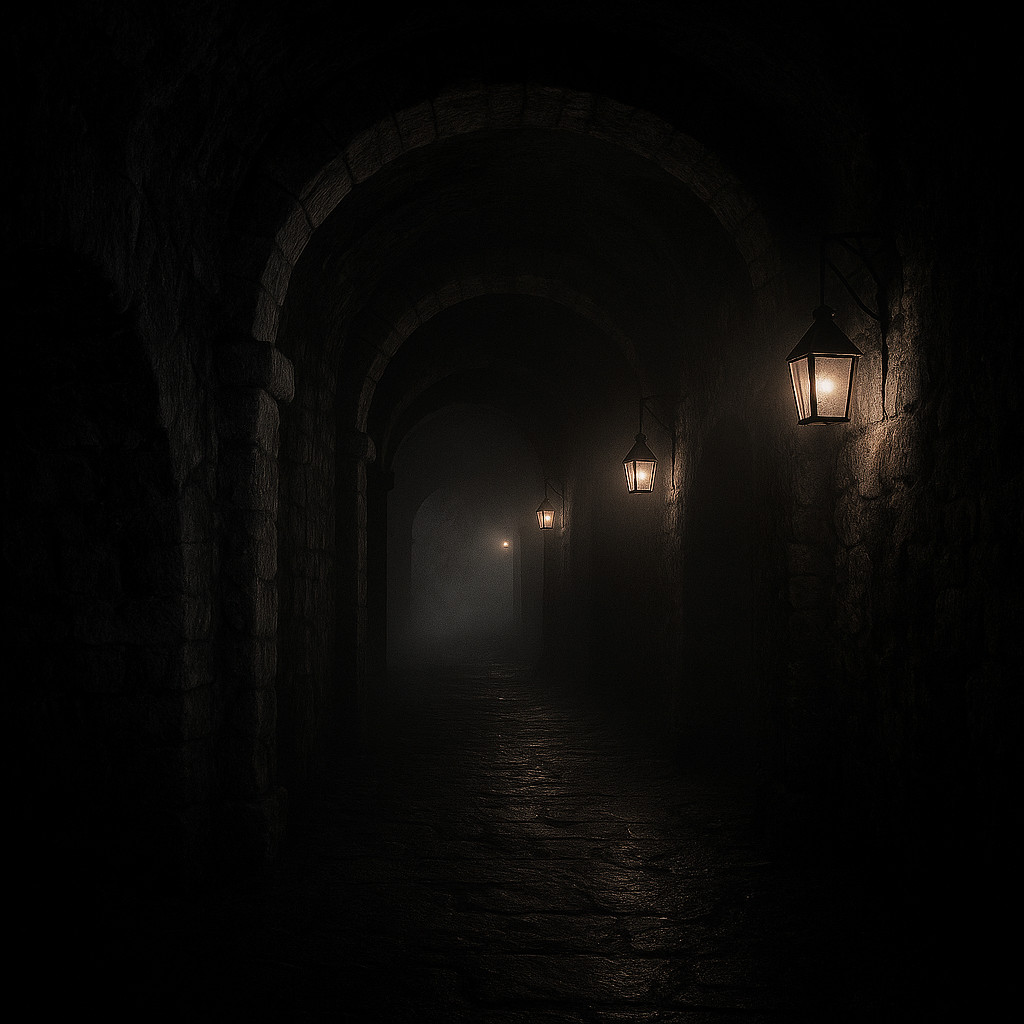
Far below the grand courtyards and Baroque façades of Buda Castle lies a world few visitors imagine — a shadowy maze carved by nature and time.
The Buda Castle Labyrinth is one of Budapest’s most mysterious places, a subterranean realm of echoing tunnels, dripping walls, and legends that bridge centuries.
It’s a journey beneath the city’s royal heart — where history, myth, and darkness intertwine.
1. Beneath the Palace: Origins of the Buda Castle Labyrinth
The Buda Castle Labyrinth stretches for over six miles under Castle Hill. It wasn’t built overnight, but shaped gradually by nature itself.
Millions of years ago, thermal waters — the same that feed the Széchenyi Thermal Bath — eroded the limestone beneath the hill, forming a network of caves.
Over the centuries, humans expanded them, turning these natural voids into storage cellars, secret passageways, and wartime shelters.
During the Middle Ages, kings used the tunnels to store treasures and wines from Tokaj. Later, the labyrinth served as a refuge during the Turkish occupation, then as a military hospital, and even a prison. Each layer of history left its mark, adding to the eerie atmosphere that defines it today.
2. Legends in the Dark — Vlad the Impaler and the Dracula Connection
One of the labyrinth’s most infamous tales involves Vlad the Impaler, the 15th-century Wallachian prince who inspired Bram Stoker’s Dracula.
According to legend, Vlad was imprisoned in the Buda Castle Labyrinth between 1462 and 1475, during the reign of King Matthias Corvinus.
Although historians debate the accuracy of the story, the association remains strong. Today, the labyrinth’s dim corridors and flickering torches make it easy to imagine the shadows of a captive prince pacing behind the stone walls.
This legend has made the site one of Budapest’s most atmospheric destinations — a blend of fact, folklore, and gothic imagination.
3. Exploring the Buda Castle Labyrinth Today
Descending into the Buda Castle Labyrinth feels like stepping into another century.
The entrance, located near the Matthias Church and Fisherman’s Bastion, leads into a dimly lit tunnel system where time seems suspended.
Visitors follow a self-guided path illuminated by soft lanterns, passing through chambers filled with sculptures, medieval relics, and surreal installations.
One hall recreates prehistoric cave art; another echoes with opera music that feels almost ghostly in the darkness.
The most chilling section is the so-called “Dracula Chamber,” where wax figures and shadows retell the story of Vlad’s imprisonment.
It’s a journey that combines archaeology, myth, and art — a living museum beneath the castle’s foundations.
4. A Refuge in Times of War
The Buda Castle Labyrinth has served many purposes, but perhaps none as vital as during the wars of the 20th century.
In World War II, the tunnels sheltered civilians during bombings. Later, during the 1956 Hungarian Uprising, locals once again hid underground as the city above burned.
Remnants of these times remain: old ventilation shafts, military markings, and rusted doors that lead into sealed corridors.
Each scar tells a story — of survival, of fear, and of the resilience that defines Budapest itself.
5. Architecture and Atmosphere
Unlike the gilded rooms of Buda Castle above, the labyrinth’s architecture is primal and raw.
Stone arches rise from uneven floors, and moisture glistens on walls that have witnessed centuries. The constant temperature — around 12 °C year-round — adds to the uncanny feeling of isolation.
The sound of dripping water echoes endlessly, and every turn reveals new shadows. It’s this combination of geological beauty and human history that makes the Buda Castle Labyrinth one of Budapest’s most unforgettable experiences.
6. Myths, Spirits, and Symbolism
Some believe the labyrinth holds more than history. Local legends speak of lost treasures, ghostly monks, and secret chambers that stretch beneath the entire Castle District.
A few even claim the tunnels connect to Gellért Hill, crossing under the Danube River — though no proof has ever been found.
The labyrinth also served as a symbolic journey space in the Middle Ages, representing descent into the unconscious and rebirth. Modern visitors can still feel that sense of transformation as they emerge from darkness into sunlight once more.
7. Visiting the Buda Castle Labyrinth — Practical Tips
- Location: Úri utca 9, within the Castle District.
- Opening hours: Usually open daily, but check current schedules on the official site (https://labirintusbudapest.hu/).
- Tickets: Available on-site; guided tours sometimes offered in English.
- Temperature: Cool and humid — bring a light jacket even in summer.
- Photography: Allowed, but flash is discouraged to preserve the atmosphere.
After your underground adventure, wander the Buda Castle District — explore Matthias Fountain, visit Ruszwurm Café for a pastry, and take in the breathtaking panorama from Fisherman’s Bastion.
8. The Labyrinth as a Cultural Experience
Beyond its historical significance, the Buda Castle Labyrinth is also an artistic space.
Temporary exhibits blend light, sound, and sculpture to reinterpret the cave’s mysteries. From eerie silhouettes to ancient motifs, every installation invites introspection.
Local artists often use the site as a metaphor for Budapest itself — a city of dualities: light and shadow, beauty and decay, legend and truth.
9. Nearby Attractions and Perfect Pairings
Visiting the labyrinth is just one part of exploring Castle Hill. Combine it with other must-sees:
- Buda Castle — the palace above, home to the Budapest History Museum and Hungarian National Gallery.
- Hospital in the Rock Museum — another haunting underground site that once functioned as a WWII hospital and nuclear bunker.
- Philosophers’ Garden — a peaceful viewpoint after the darkness below.
These sites together offer a full picture of Budapest’s resilience — above and beneath the surface.
10. A Descent into Budapest’s Soul
The Buda Castle Labyrinth is more than a tourist attraction — it’s an encounter with the city’s hidden self.
While Fisherman’s Bastion and the Hungarian Parliament Building shine under daylight, the labyrinth whispers in the dark.
Every echo tells of medieval kings, forgotten prisoners, and ordinary citizens who sought shelter here. Emerging back into the sunlight of Castle Hill feels symbolic — like awakening from a dream that blurs the line between history and myth.
If you truly want to feel Budapest — not just see it — descend into its underworld.
Walk the same tunnels that have survived earthquakes, wars, and legends.
And when you rise again to the cobblestones of Buda Castle District, you’ll carry a piece of that mystery with you.
Join our Budapest Walking Tour to discover not only what’s visible on the surface, but the secrets that lie beneath — in the eternal silence of the Buda Castle Labyrinth.
Buda Castle Labyrinth — Location on the Map
Beneath the royal courtyards of Buda Castle lies one of Budapest’s most enigmatic attractions — the Labyrinth. This underground maze of stone passages has witnessed centuries of intrigue, from medieval fortresses to wartime shelters, offering a haunting glimpse into the city’s hidden underworld.