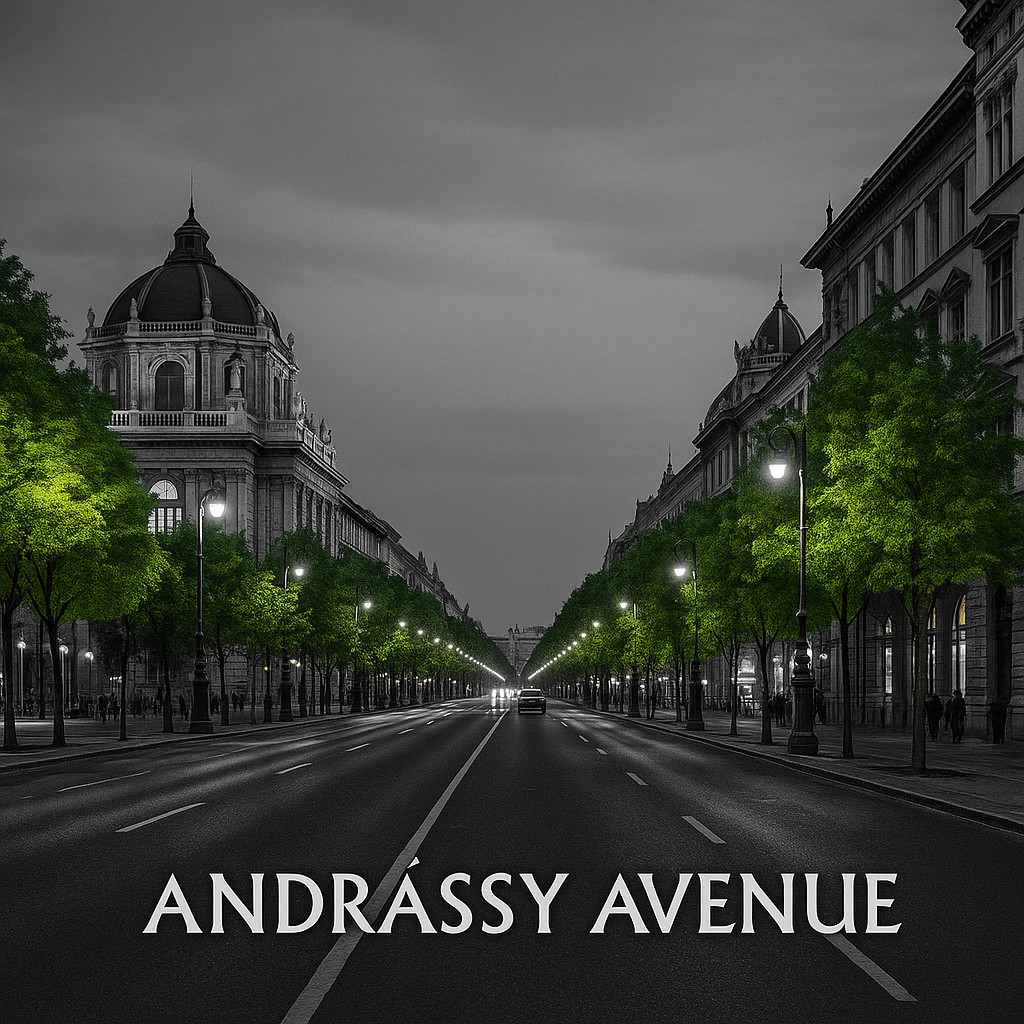
If Paris has the Champs-Élysées, Budapest has Andrássy Avenue — a grand boulevard lined with history, culture, and timeless beauty.
Stretching from the Hungarian State Opera House to Heroes’ Square, Andrássy Avenue Budapest is not just a street; it’s a journey through the city’s golden age.
Every step unveils a new chapter — mansions whispering stories of aristocrats, cafés filled with poets, and theaters that once shaped Hungary’s artistic identity.
1. A UNESCO World Heritage Treasure
Declared a UNESCO World Heritage Site, Andrássy Avenue Budapest was completed in 1885 as part of a major urban renewal inspired by Parisian design. Its tree-lined sidewalks, elegant façades, and harmonious proportions reflect Budapest’s ambition to be the “Pearl of the Danube.”
The avenue connects Elizabeth Square in downtown Pest with City Park (Városliget), creating a graceful transition from the urban bustle to green serenity. Beneath it runs the historic Millennium Underground Railway, the first metro line in continental Europe.
2. The Hungarian State Opera House — A Cultural Jewel
Midway along the avenue stands the Hungarian State Opera House, a masterpiece by architect Miklós Ybl. Opened in 1884, its grand façade is adorned with statues of Liszt and Erkel — Hungary’s greatest composers.
Inside, the gilded ceiling and crystal chandeliers rival those of Vienna and Paris. Visitors can join guided tours or attend a performance to experience the city’s artistic soul firsthand.
If you’re planning a cultural evening, pair your visit with nearby attractions like the Müpa Palace of Arts or explore more venues in our Budapest Art & Culture guides.
3. Palaces of the Aristocracy
Walking north from the Opera, the avenue becomes a living gallery of neo-Renaissance architecture.
Among its highlights are the Drechsler Palace, the Andrássy Palace, and the Károlyi Palace, each once home to Hungarian nobility and diplomats.
Many of these buildings now house embassies and cultural institutions, preserving their elegance while serving a modern role. Their symmetrical façades, iron balconies, and sculpted details speak of a time when grandeur was everyday life.
4. Café Culture — Echoes of Budapest’s Golden Age
Andrássy Avenue Budapest is inseparable from its cafés — the intellectual heartbeats of the city during the late 19th century. Writers, journalists, and artists would gather for coffee and debate ideas that shaped Hungarian culture.
Among the most famous is the New York Café, often called “the most beautiful café in the world.” Its golden ceilings and marble columns are a glimpse into the opulence of the Belle Époque.
For a quieter stop, visit Café Bouchon or Callas Café, both near the Opera House. Each cup of espresso feels like a toast to history.
5. Boutique Shops and Luxury Fashion
Andrássy Avenue is Budapest’s luxury corridor — a blend of old-world charm and contemporary style.
Here, flagship stores of international brands stand beside Hungarian designer boutiques and antique galleries.
It’s ideal for a leisurely afternoon stroll — window-shopping under the trees, pausing for coffee, and soaking in the architecture that makes Andrássy Avenue Budapest so iconic.
If you prefer local crafts, visit the Great Market Hall Budapest or check out Local Markets Worth Walking To for authentic Hungarian designs.
6. The House of Terror Museum — A Somber Reminder
Not all of Andrássy’s stories are glamorous.
At number 60 stands the House of Terror Museum, once the headquarters of both the Nazi and Communist secret police. Today, it’s one of the most powerful museums in Hungary, documenting the country’s turbulent 20th century.
Its black façade, chilling exhibits, and preserved prison cells serve as a haunting reminder of the cost of freedom. Visiting it adds depth to your understanding of Budapest’s past — a contrast to the avenue’s beauty above ground.
7. Kodály Körönd and Beyond
Further along Andrássy Avenue Budapest, you’ll reach Kodály Körönd, a circular square surrounded by ornate townhouses.
In summer, it’s lined with outdoor cafés and street performers, creating a relaxed yet elegant atmosphere.
A few minutes away, the avenue widens dramatically into Heroes’ Square (Hősök tere), flanked by the Museum of Fine Arts and the Art Hall. This monumental space commemorates Hungary’s most important historical figures, and it’s one of the city’s top photo spots — especially at sunset.
8. City Park — Green Refuge at the End of the Avenue
After the grandeur of the avenue, City Park (Városliget) feels like a breath of fresh air.
Here you’ll find the romantic Vajdahunyad Castle, the Széchenyi Thermal Bath, and the city’s legendary Ice Rink in winter.
In summer, paddle boats glide over the lake under the shade of chestnut trees — a calm contrast to the stately rhythm of Andrássy Avenue Budapest.
9. Night Walk — When the Boulevard Glows
At dusk, the entire avenue transforms. The façades light up, the tramlines gleam, and the Hungarian State Opera House radiates golden warmth.
Take a slow walk from Oktogon to the Opera, pausing to photograph the illuminated balconies and quiet corners.
For an elevated experience, end your evening at 360 Bar or Leo Rooftop Bar — both offer dazzling views of the city skyline.
If you’re capturing your trip on camera, you’ll find more inspiration in our Romantic Photo Spots in Budapest guide.
10. How to Explore Andrássy Avenue Budapest
- Start early: Begin near the Opera House and follow the avenue north toward Heroes’ Square.
- Use the Millennium Underground: Budapest’s M1 metro line runs the full length beneath the avenue — a historic attraction on its own.
- Walk both ways: The changing light transforms the scenery between morning and evening.
- Join a guided tour: Our Budapest Walking Tour includes stops at the Opera, cafés, and palaces along Andrássy, revealing stories hidden behind the façades.
A Walk Through Time and Grace
Walking Andrássy Avenue Budapest is like tracing the heartbeat of the city — past and present intertwined under canopies of trees and light.
It’s where Budapest’s elegance was born and where its soul still lingers in every echo of footsteps, every note of music from the Opera House, and every whisper of wind across its mansions.
For travelers seeking beauty, history, and inspiration, this boulevard is not just a destination — it’s a story to be walked.
Andrássy Avenue — Location on the Map
Andrássy Avenue, Budapest’s answer to the Champs-Élysées, is a majestic boulevard where history meets high style. From the State Opera House to Heroes’ Square, it guides visitors through a world of palatial architecture, designer stores, and timeless elegance — the ultimate promenade of the Hungarian capital.